
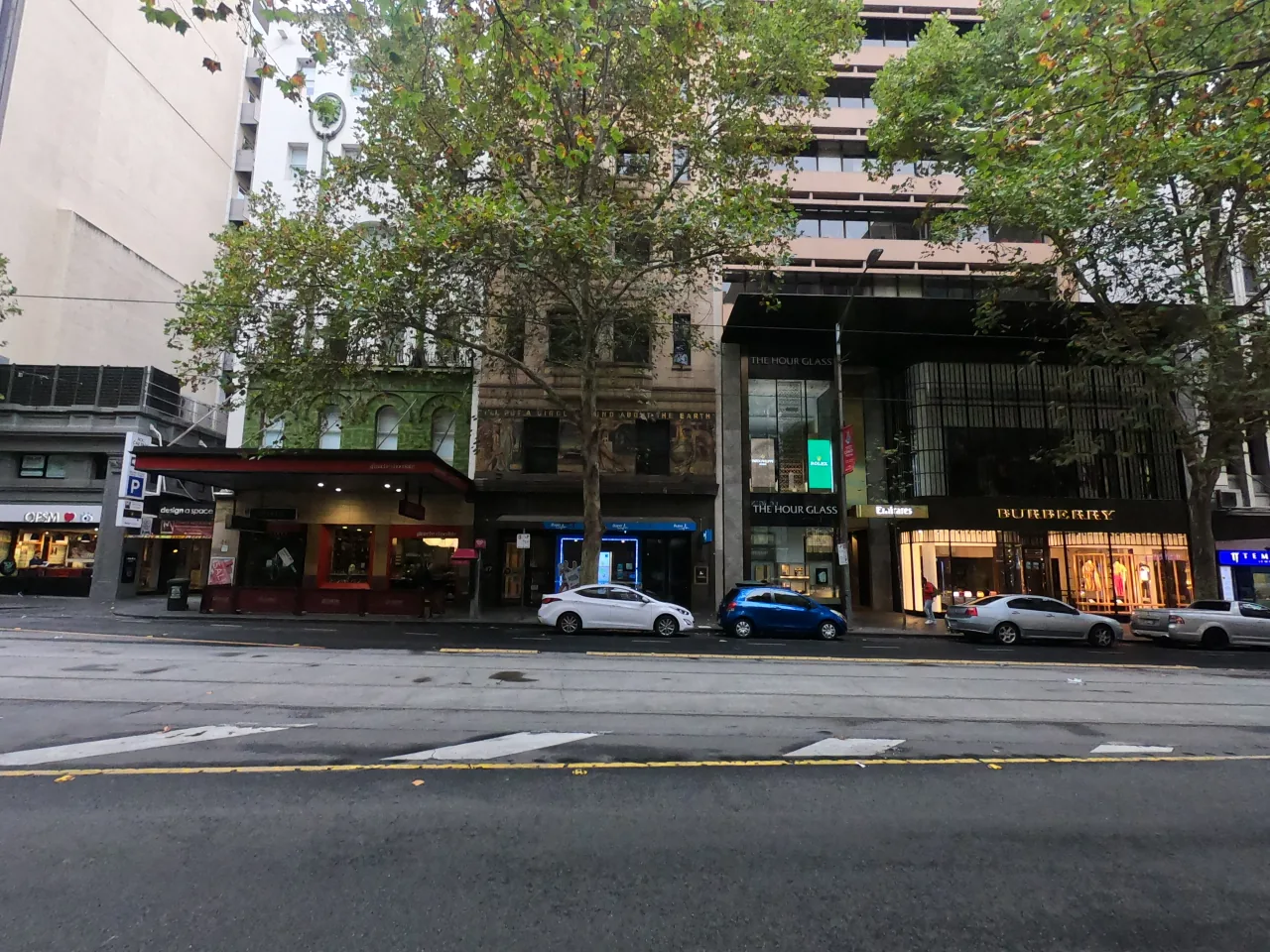
Walk east along Collins Street from Swanston and the street begins to climb. The shopfronts thin out, the trees thicken, and the view ahead resolves into the long stone front of the Old Treasury, which has closed the eastern end of the street since 1862. Somewhere past Russell Street the city stops calling this Collins Street and starts calling it the Paris End.
A mile laid out in 1837
The street itself is a survey line: Robert Hoddle drew it exactly one mile long and ninety-nine feet wide, and the first allotments were auctioned on 1 June 1837. It carries the name of David Collins, the lieutenant-governor whose short-lived 1803 settlement at Sorrento failed thirty years before the city succeeded. The eastern rise sat furthest from the wharves and closest to the government reserves.
Doctors, clubs and churches
Dr Godfrey Howitt arrived in 1840 and established his practice and a walled garden off the eastern end; by the 1860s the medical profession had congregated around him, and Collins Street East remained Melbourne's consulting quarter for the better part of a century. The Melbourne Club, founded in 1838, settled here too — its Leonard Terry clubhouse of 1858–59 still holds its ground mid-block. The Mechanics' Institution of 1839 became the Athenaeum, whose Collins Street face dates from 1886. And Joseph Reed's office built the end of the street its two church spires: the Independent Church of 1866, now St Michael's, and Scots' Church, opened in 1874 on the corner of Russell Street.
The elms of 1875
The name arrived long after the look. The City of Melbourne's heritage assessment records that the street's "tree plantations in the French boulevard manner" date from 1875 — the first of them elms, with plane trees joining in the twentieth century. It took another eight decades for the boulevard to earn its nickname: "the Paris End" was in everyday use by the early 1950s, the years when Georges and Mirka Mora took rooms at 9 Collins Street and the street's café-and-couture reputation set. In 1958 the Oriental Hotel put nineteen tables out on the footpath — Melbourne's first pavement café, on a street that had been imitating a boulevard since the elms went in.
Nine Collins Street
One address carries more of the street's story than any other. Grosvenor Chambers, built at 9 Collins Street in 1888, was the first purpose-built artists' studio building in Australia; Tom Roberts, Arthur Streeton, Charles Conder and John Longstaff all painted there, working above the street many of them painted. When the Moras arrived in the early 1950s, they were moving into the same building — sixty years of the city's art history stacked on one doorstep.
Nearly lost, then kept
The street's survival was not automatic. The Oriental Hotel came down in 1973, and the demolition years produced the Collins Street Defence Movement, with the National Trust arguing alongside it, out of which grew the heritage protections that now govern the precinct. What stands on the eastern blocks today stands because people argued for it.
What stands now
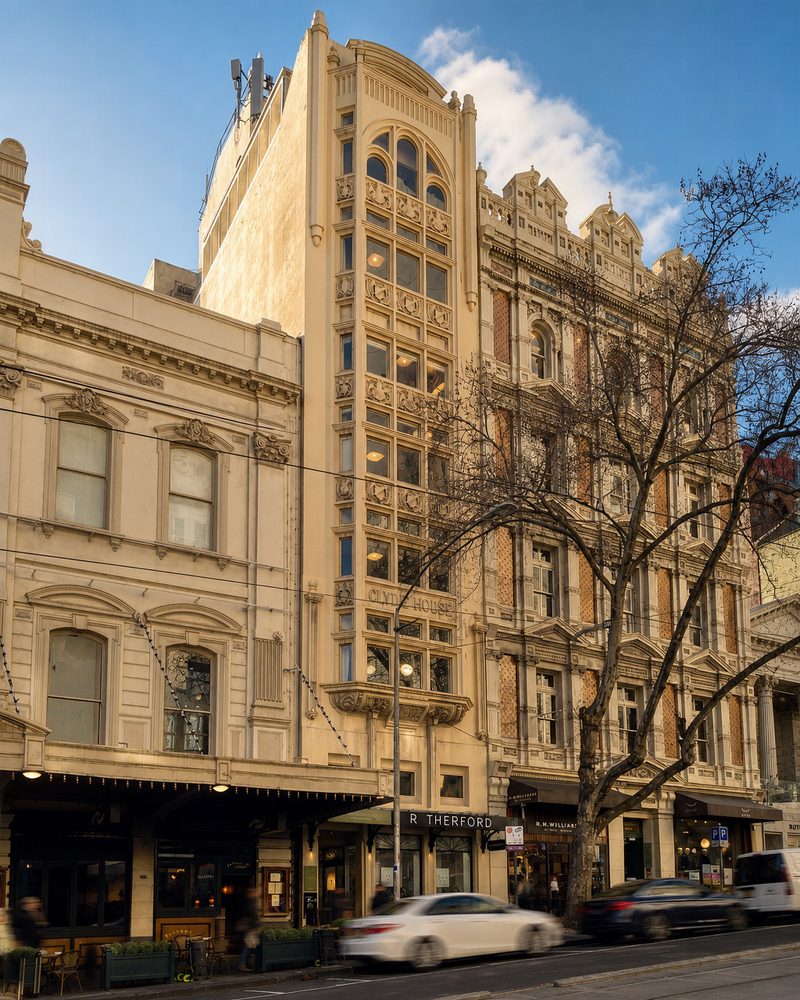
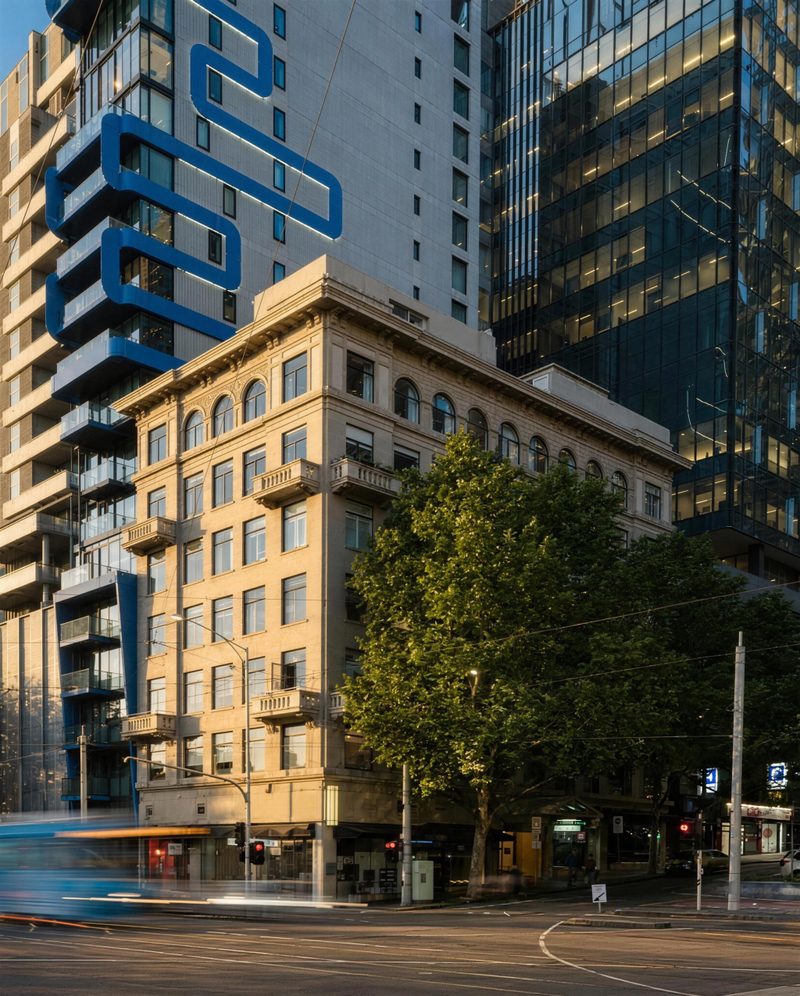
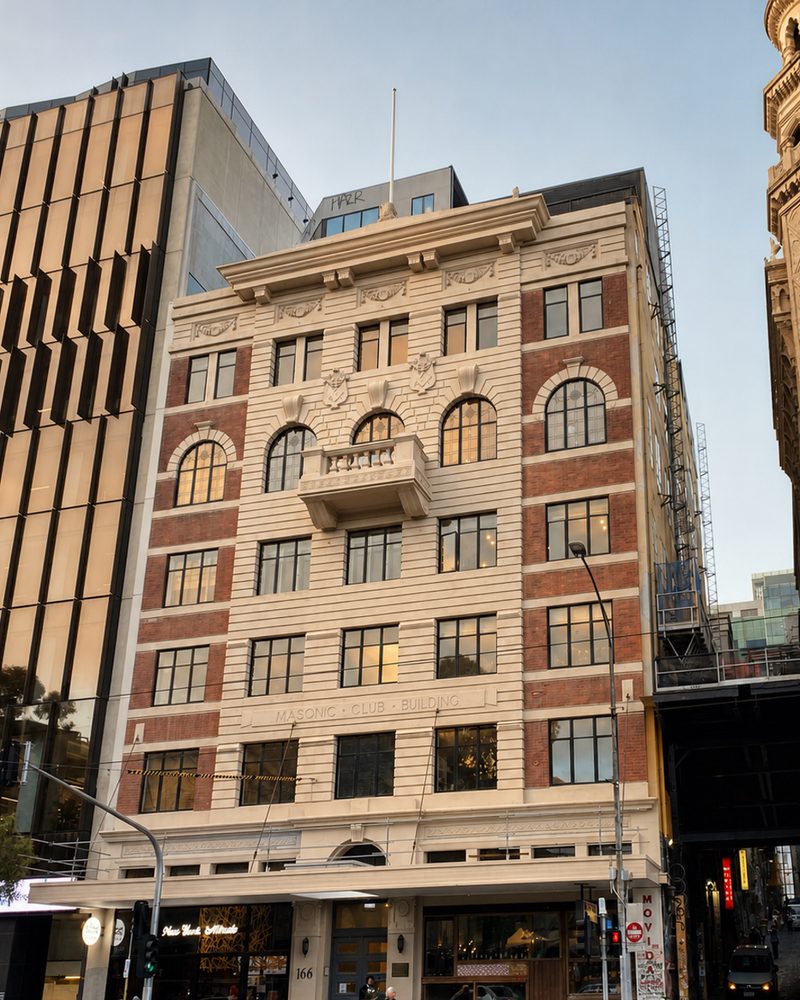
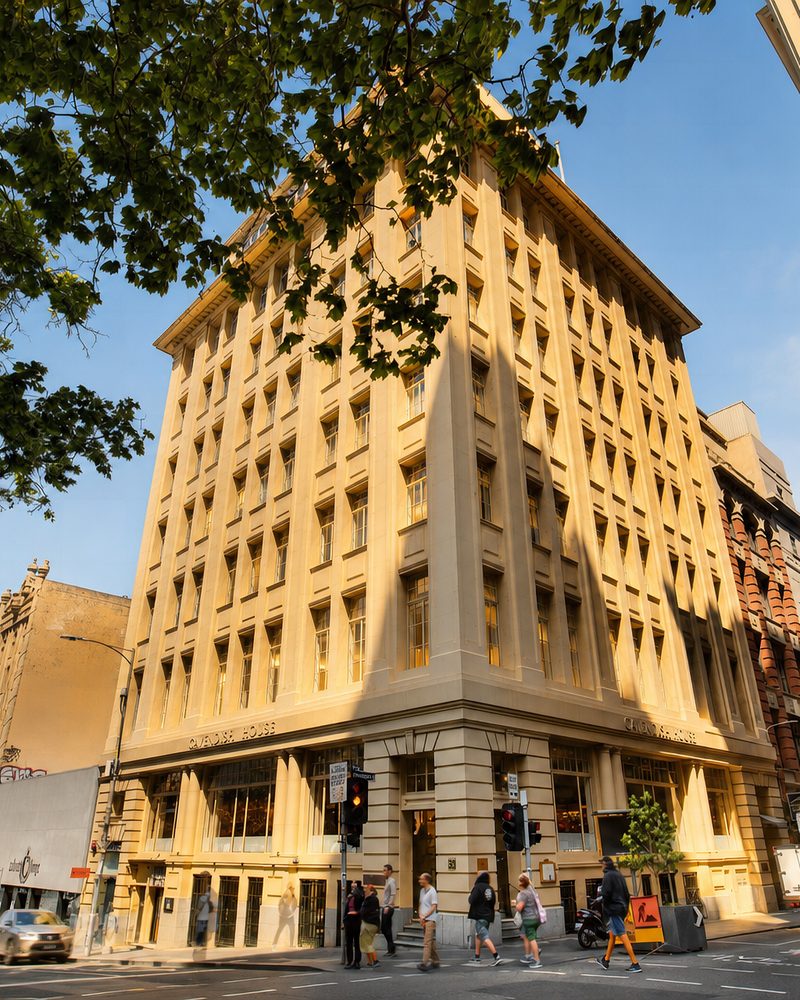
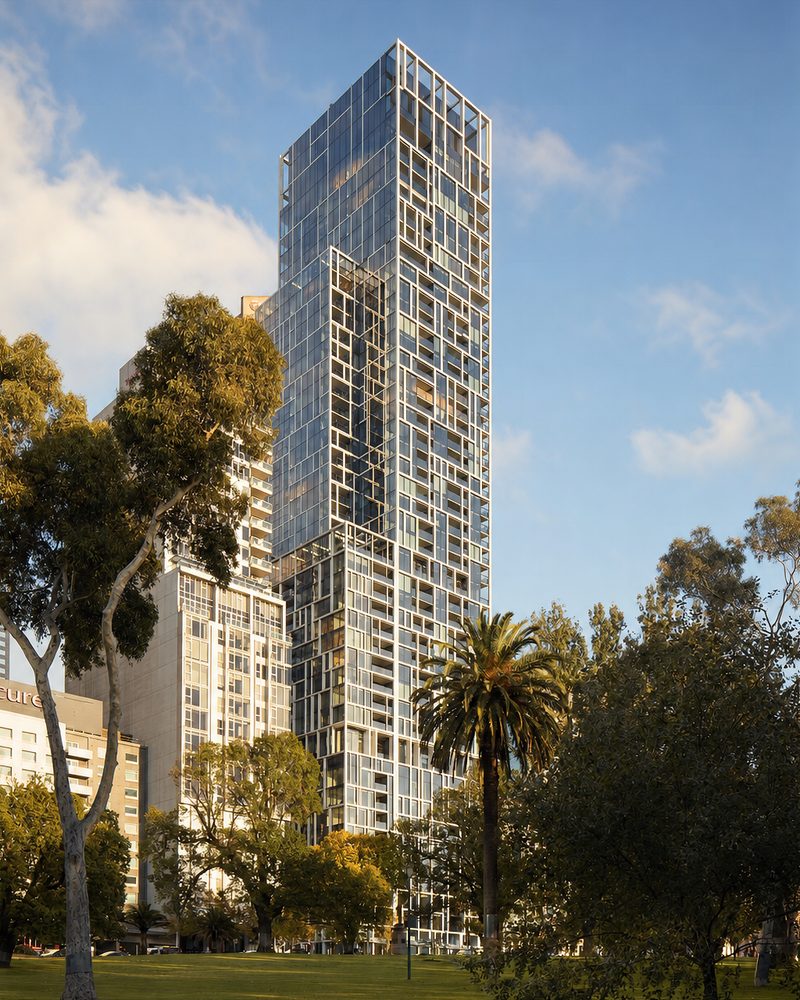
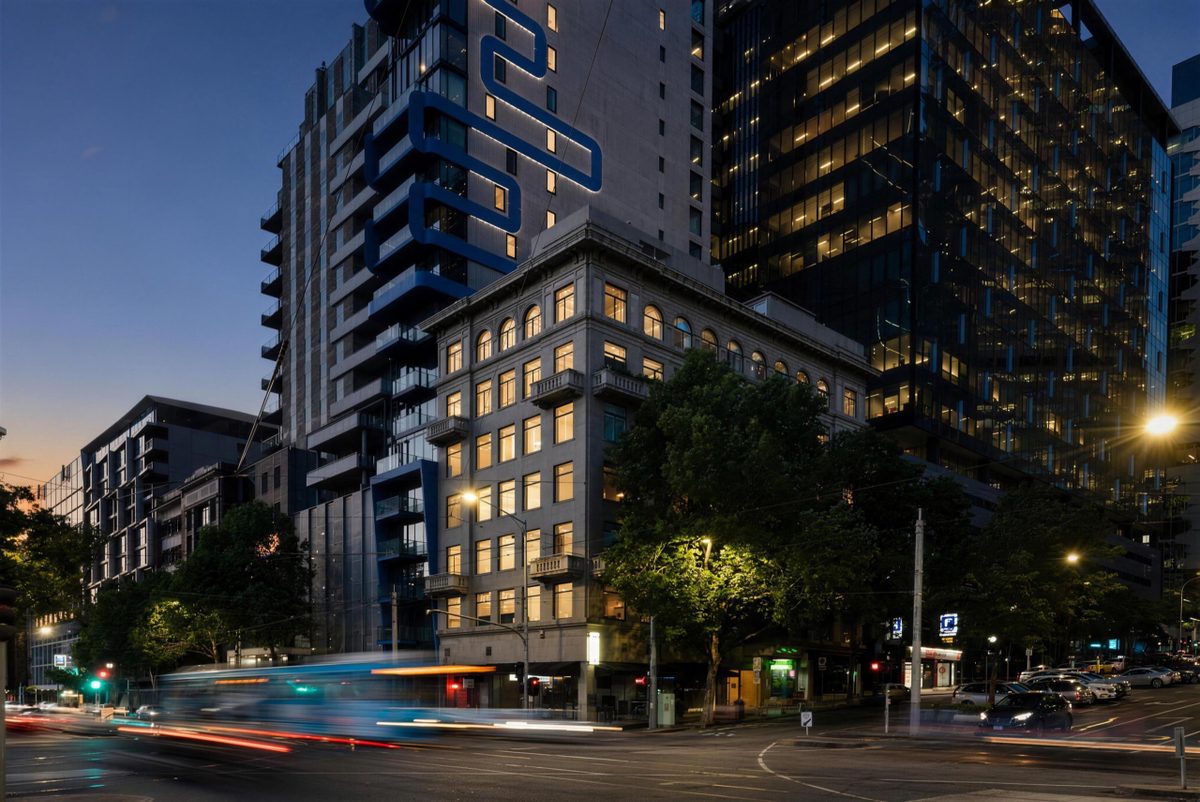
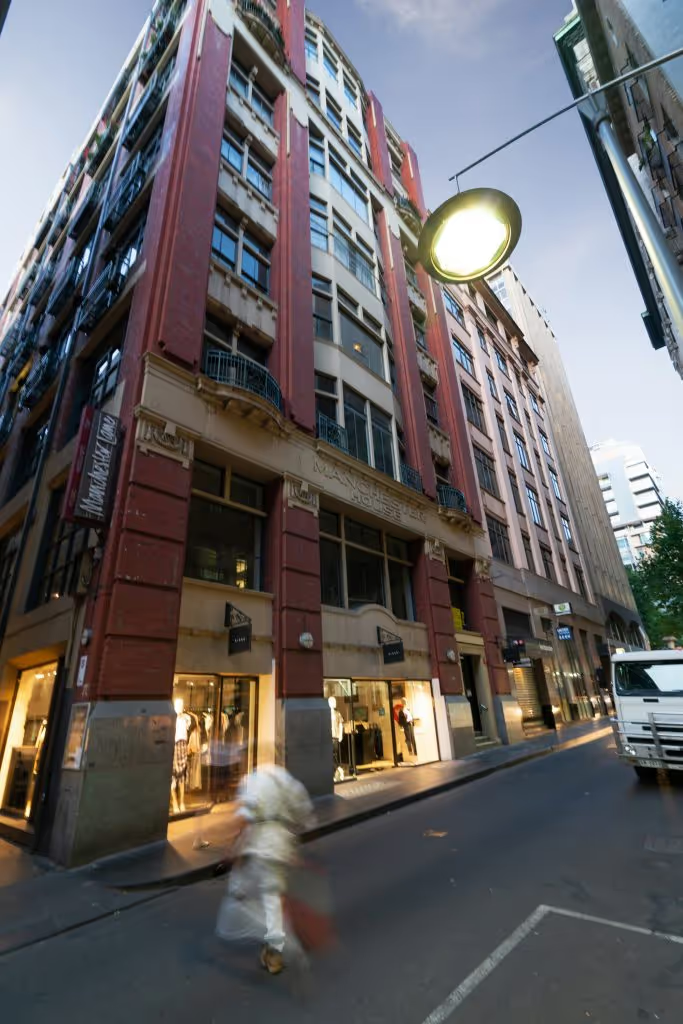
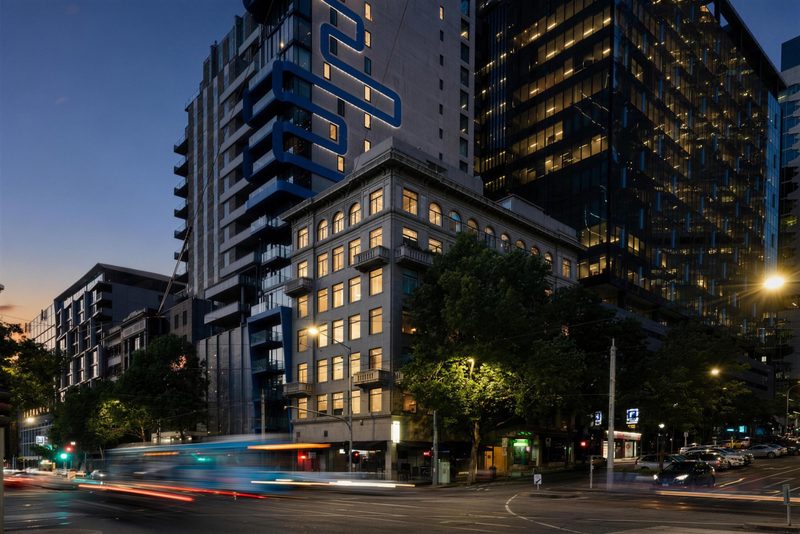
And what stands is still lived in. Clyde House, Nahum Barnet's office building of 1915, holds apartments above Collins Street. So does 1 Exhibition Street, the Victorian Cricket Association's 1925 building on the corner, converted decades ago. Around the corner on Flinders Street, Joseph Plottel's 1927 Masonic Club building carries homes where the clubrooms were; Cavendish House of 1927 does the same on Russell Street; and at 35 Spring Street, Bates Smart's tower of 2017 shows the same blocks still adding to themselves. None of these buildings is scenery. The Paris End's distinction was never that its past is preserved — it is that its past is occupied: office floors become apartments, club floors become homes, and the elm-and-plane canopy of 1875 shades people walking to their own front doors.
Sources
- City of Melbourne, Collins East Precinct Statement of Significance (September 2025)
- Public Record Office Victoria — first Melbourne land sales, 1837
- Australian Dictionary of Biography; eMelbourne — Godfrey Howitt; the Oriental Hotel
- Melbourne Club and Melbourne Athenaeum institutional histories
- Grosvenor Chambers records (ANU Press, "Two tenants of Number 9 Collins Street")