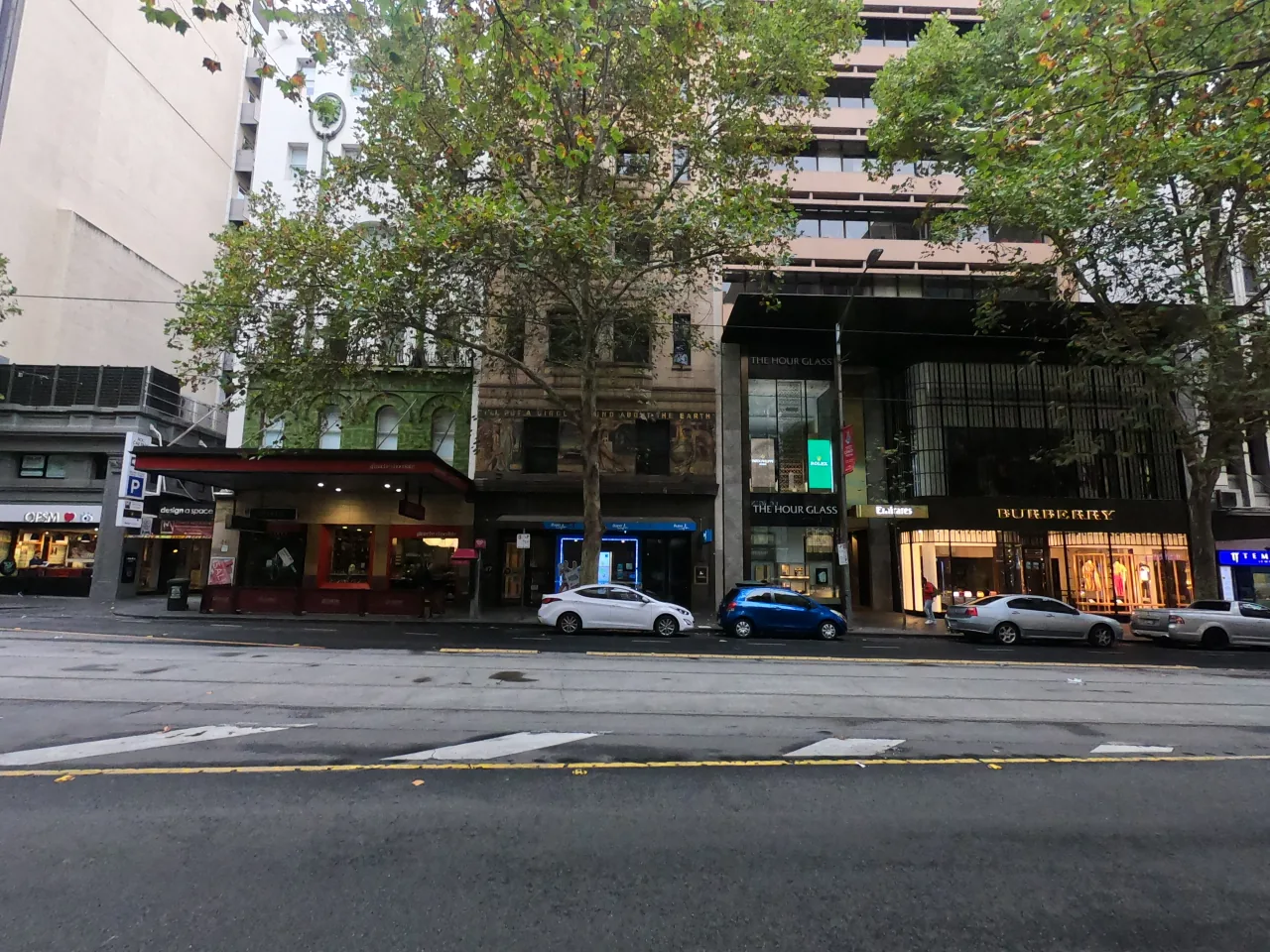


Flinders Lane is one of the narrowest streets in the Hoddle Grid, and for a century it was the busiest narrow street in Australia. It runs from Spring Street to Spencer Street, one block up from the river, and by the 1890s its warehouses had given it what the historians call a canyon-like appearance — buildings out of all proportion to the carriageway, because the money was in the buildings, not the street.
Little Flinders Street
For most of its life the street couldn't settle on a name. It was officially gazetted as Flinders Lane in 1843 — the minor pair to Flinders Street, the way Little Collins shadows Collins — but the council's own nameplates went on reading "Little Flinders Street" into the 1930s, and it took a council resolution in 1948 to make Flinders Lane finally, formally stick. The clothing trade never bothered with either version. To the trade it was simply the Lane.
The Lane
The rag trade concentrated here in the 1880s, when the big soft-goods import warehouses chose the street for its proximity to the wharves and the railway stations, and the names that pioneered Melbourne's fashion industry — Slutzkin, Blashki, Merkel among them — built the trade from Spring Street to Queen. Country buyers could come to town and "do the Lane" in a single session. In the 1920s the ground floors turned to retail — costumiers, tailors — while the merchants moved their stock upstairs; by one count the street held around six hundred and ten clothing firms in 1939, a density it kept until the early 1960s. The trade's own name for itself was Yiddish: the schmatte trade — the rag trade — and after the war a generation of Jewish refugees renewed it. From the 1960s, space, parking and rising rents did what no depression had, and the firms dispersed.
What the trade built
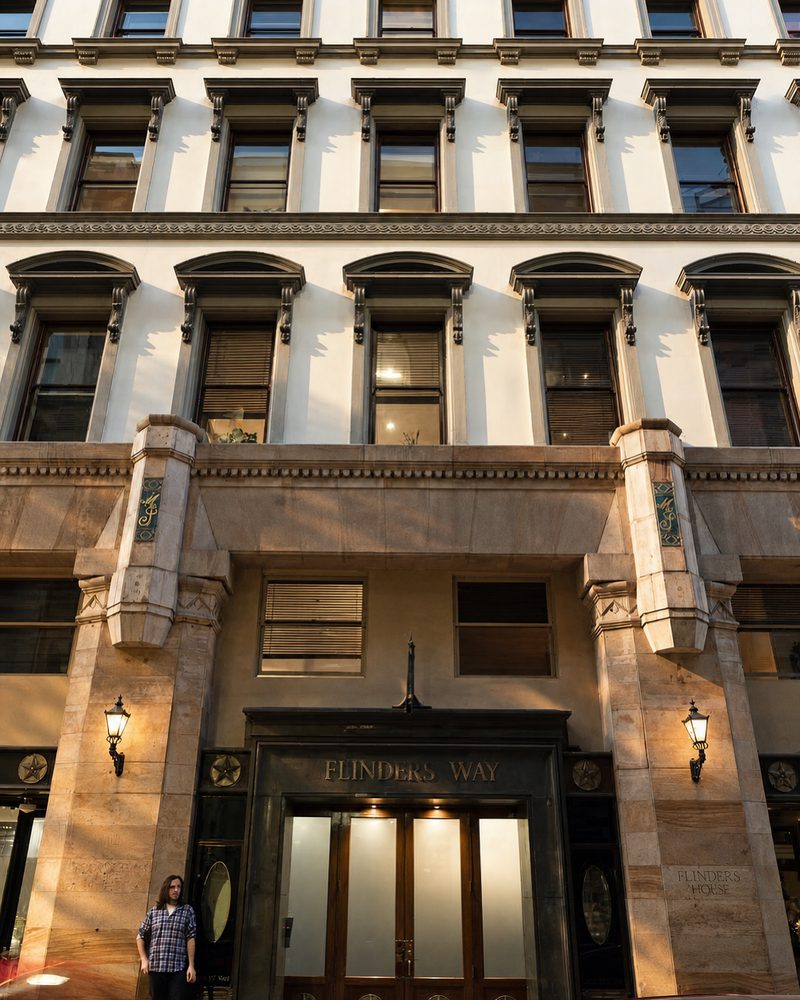
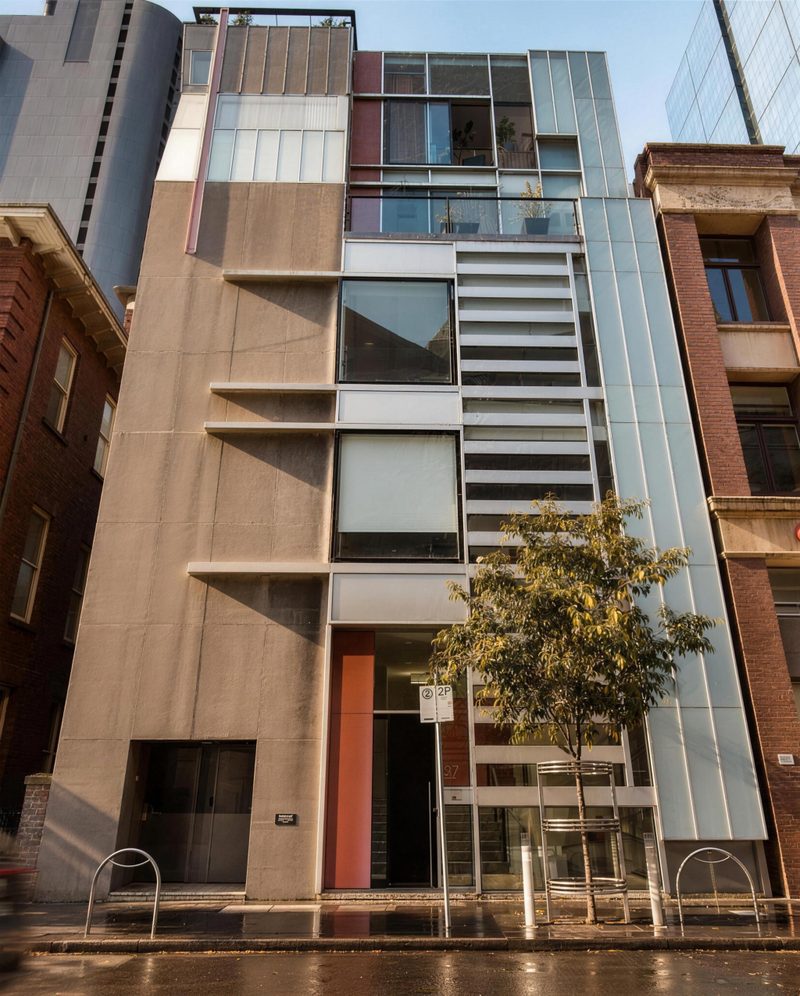
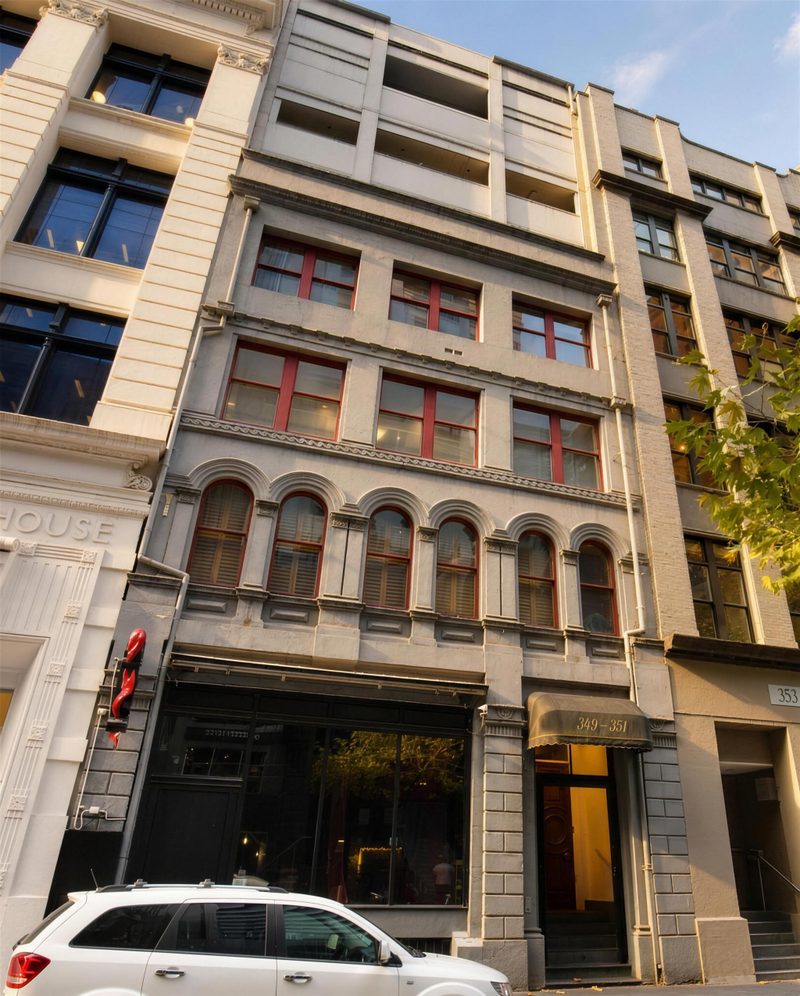
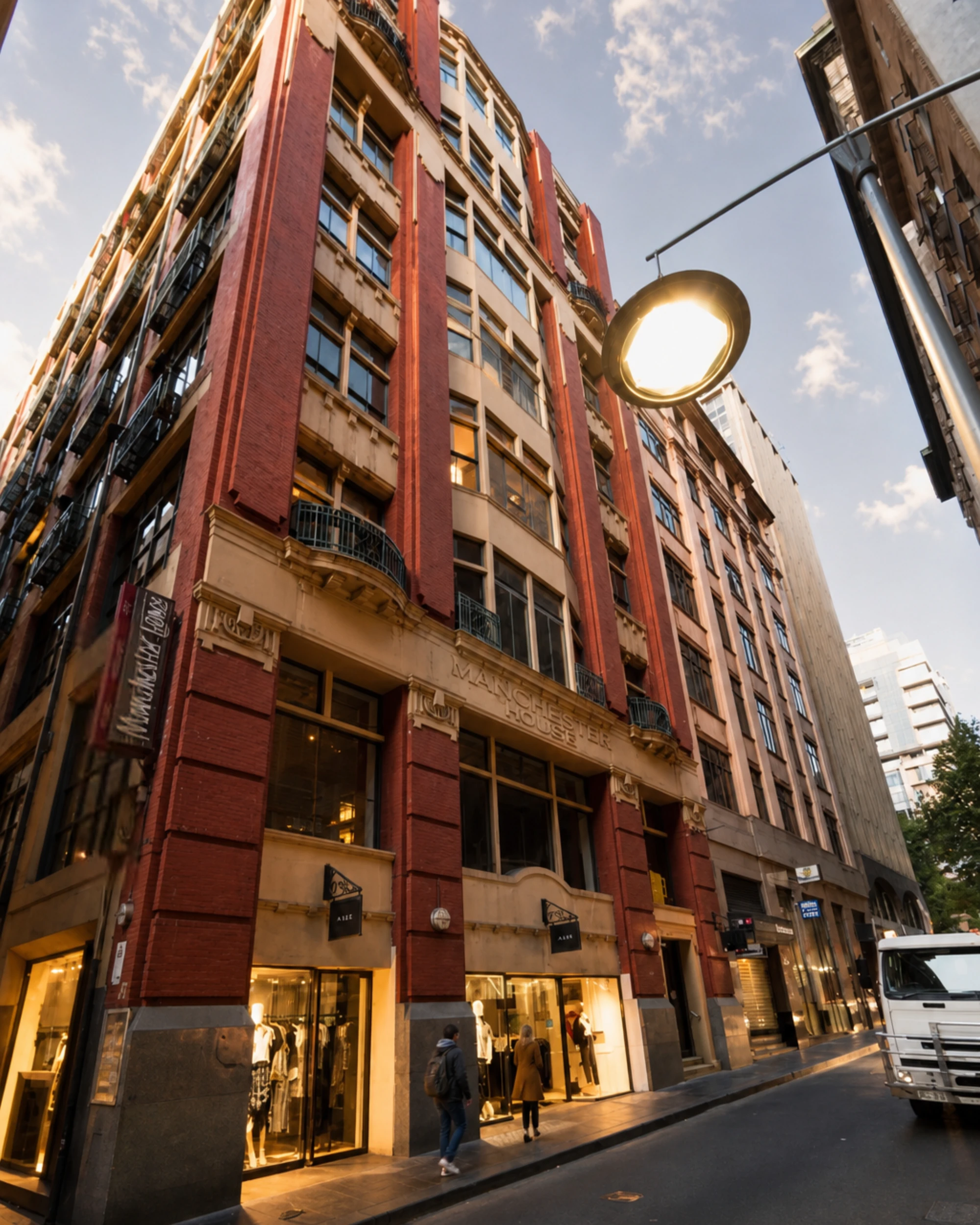
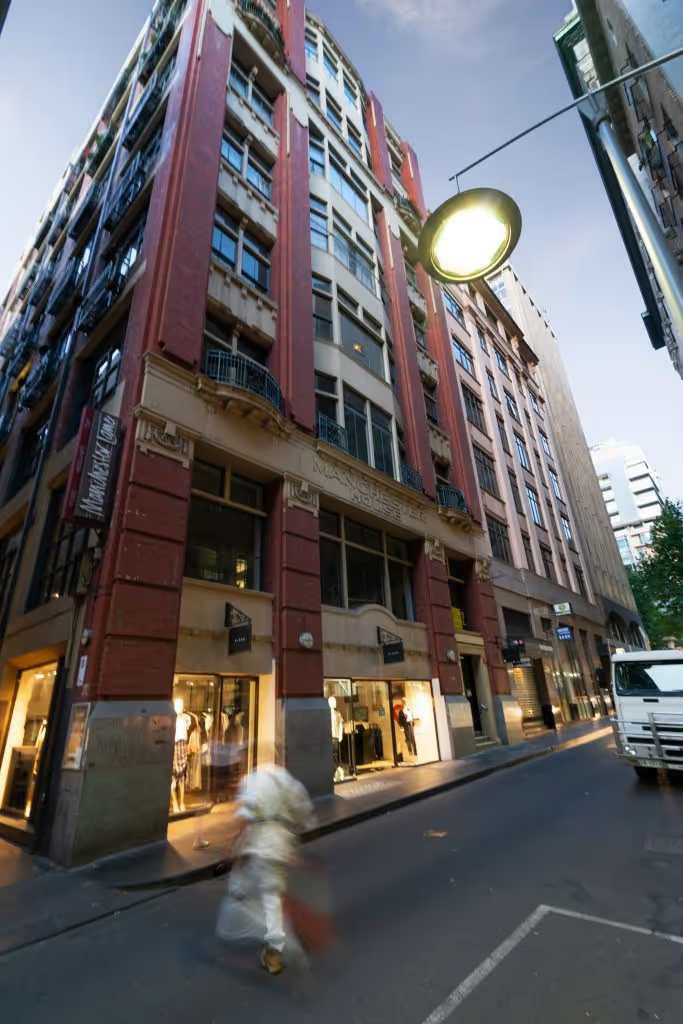
Much of the Lane's Victorian fabric is gone — bluestone warehouses replaced by hotels and car parks — which makes the survivors worth naming. Flinders House, at 238–244, opened new in January 1870: a Charles Webb design for the soft-goods merchants Banks Brothers, Bell & Co, an Italian-manner warehouse costing around £18,000, its cement-dressed front standing on bluestone footings. Manchester House, on the corner of Manchester Lane, was the Adelaide clothing firm G & R Wills's 1912 entry into the Lane — the National Trust calls it "a substantial reminder of the role of the rag trade in Flinders Lane early this century." At number 27, Sackville House carries the name of the garment maker John Sackville, its occupant to 1934. And at 349, a former warehouse and store spent the 1920s as a manufacturing chemist's and 1934 as headquarters of the Boy Scouts' Association of Victoria — the Lane was never only cloth.
The lane today
The second conversion came quietly in the late 1990s: three storeys added at 349 in its 1998 conversion, Sackville House converted in 1999, Manchester House subdivided the year after. The workrooms became apartments; the ground floors went back to what the 1920s had already made them — shops, and the cafés that run down Degraves Street and Centre Place to Flinders Street. The buyers no longer come up from the country to do the Lane in a day. The stock they came for is gone; the buildings that held it are addresses now, and people sleep on the floors where the cloth was rolled out.
Sources
- eMelbourne — "Flinders Lane" (Andrew May)
- City of Melbourne, Flinders Lane Precinct (HO506) Statement of Significance
- Illustrated Australian News, January 1870 (Flinders House, via Trove)
- Victorian Heritage Database / National Trust citations — Manchester House