
The Paris End
Collins Street east of Swanston, climbing to the Old Treasury.
11 buildings in the index · 5 for sale now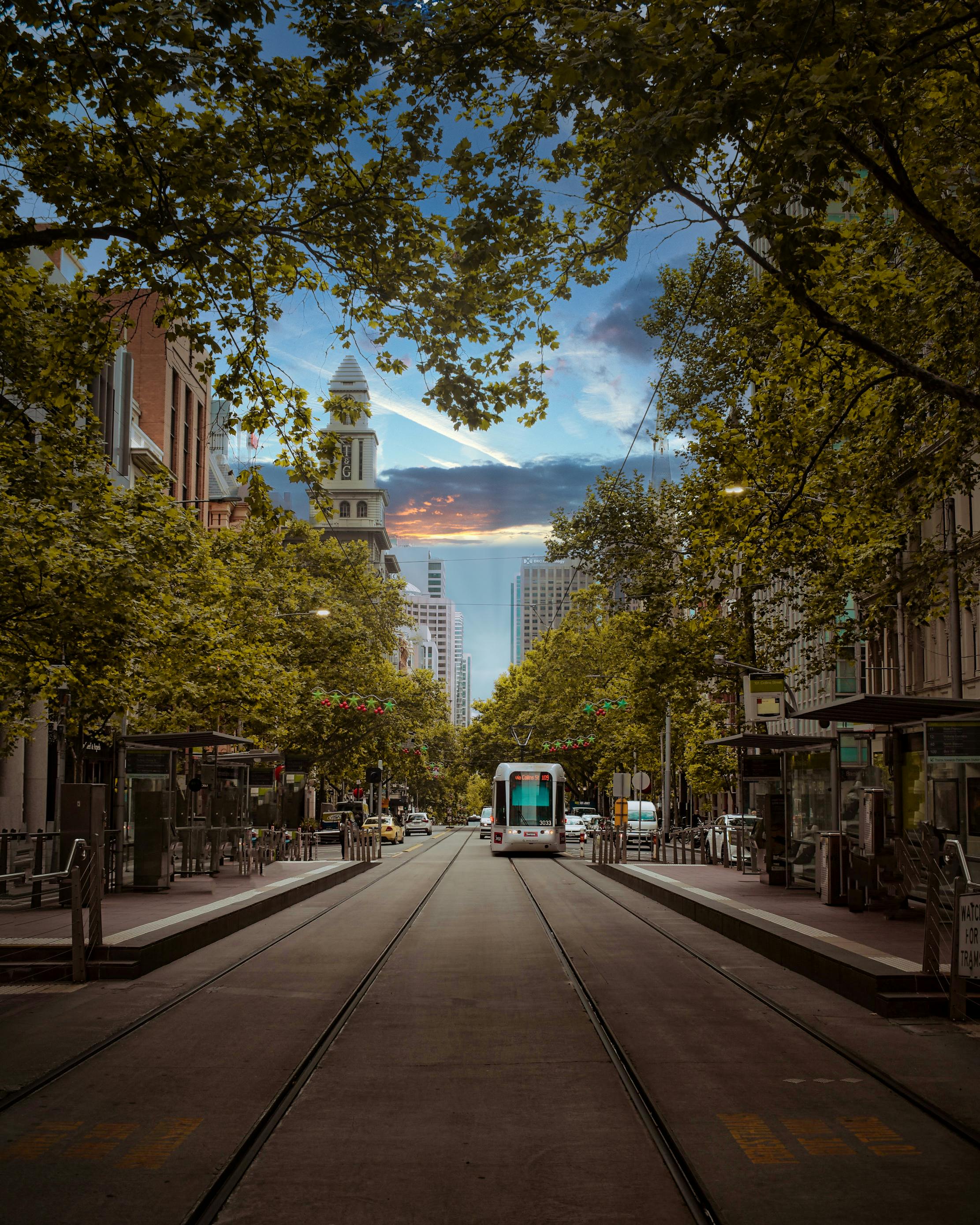
Every city has one street everyone would live on if they could; Melbourne's climbs from Swanston Street to the Old Treasury. The shopfronts along the rise are the dressiest in the country, the Treasury Gardens sit behind the top of the street, and the apartment houses have been doing the same job since the twenties.
The name arrived in the fifties.
Mirka and Georges Mora took rooms at 9 Collins Street in the fifties, when the comparison with Paris still needed making — the plane trees had been in since 1875, planted in the French style, and the street had grown into them. Seventy years on, nobody has asked for the name back.
Built in the twenties, never bettered.
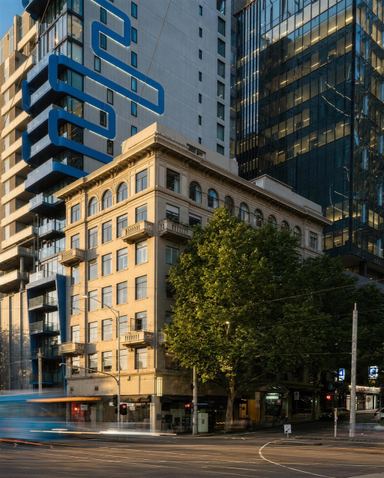
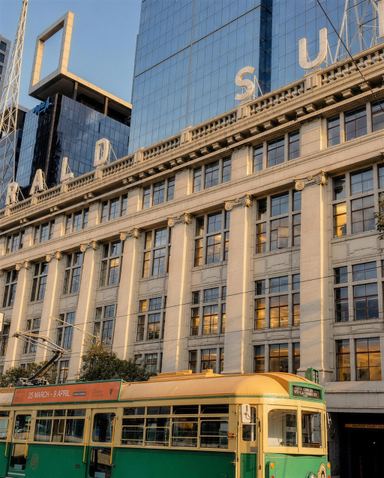
The dressiest few blocks in the country are also a place people live. Sargood House by Godfrey & Spowers, Cavendish House by A & K Henderson, the Herald Sun Building of 1921 — deep foyers, dressed stone, staircases built properly the first time. A century on, these are still the addresses the east end is judged by.
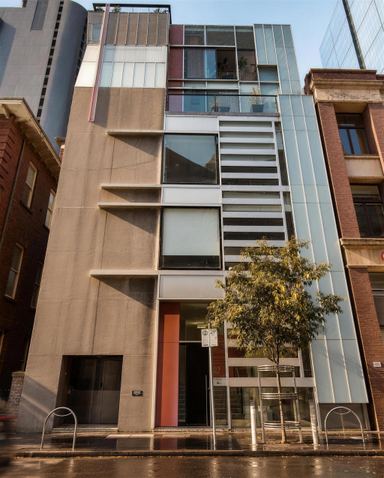
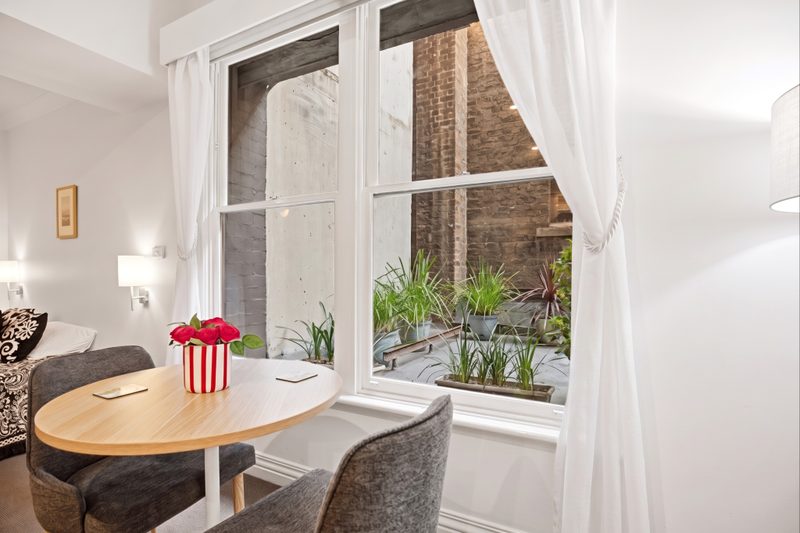
107/182 Collins Street
Not Just a Studio. A Piece of Melbourne History.
Clyde House · 1915
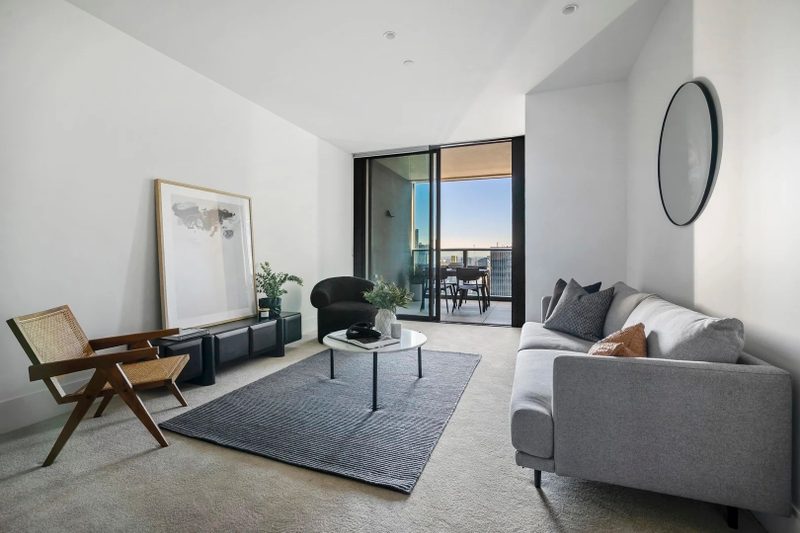
2009/35 Spring Street
Bates Smart Brilliance on the Paris End of Spring Street
35 Spring Street · 2017
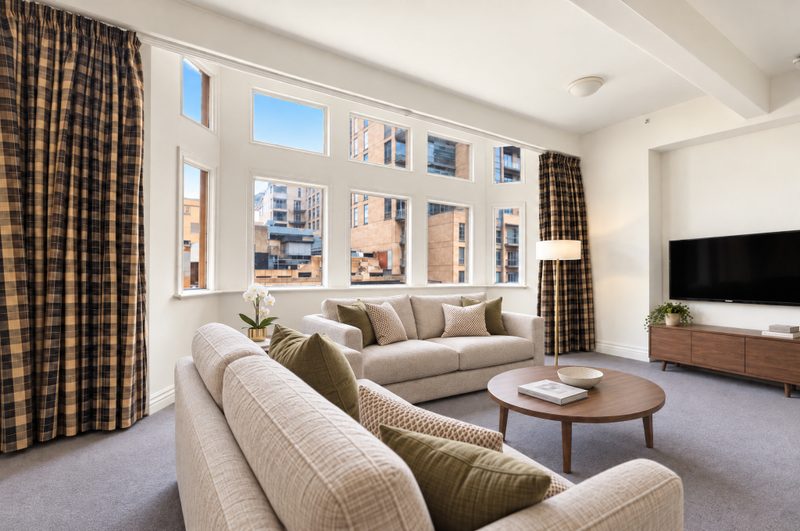
501/182 Collins Street
A Paris End Address with Timeless Character
Clyde House · 1915
The Theatre District
Bourke Street from Swanston up to Parliament House, theatres and Chinatown either side.
9 buildings in the index · 2 for sale now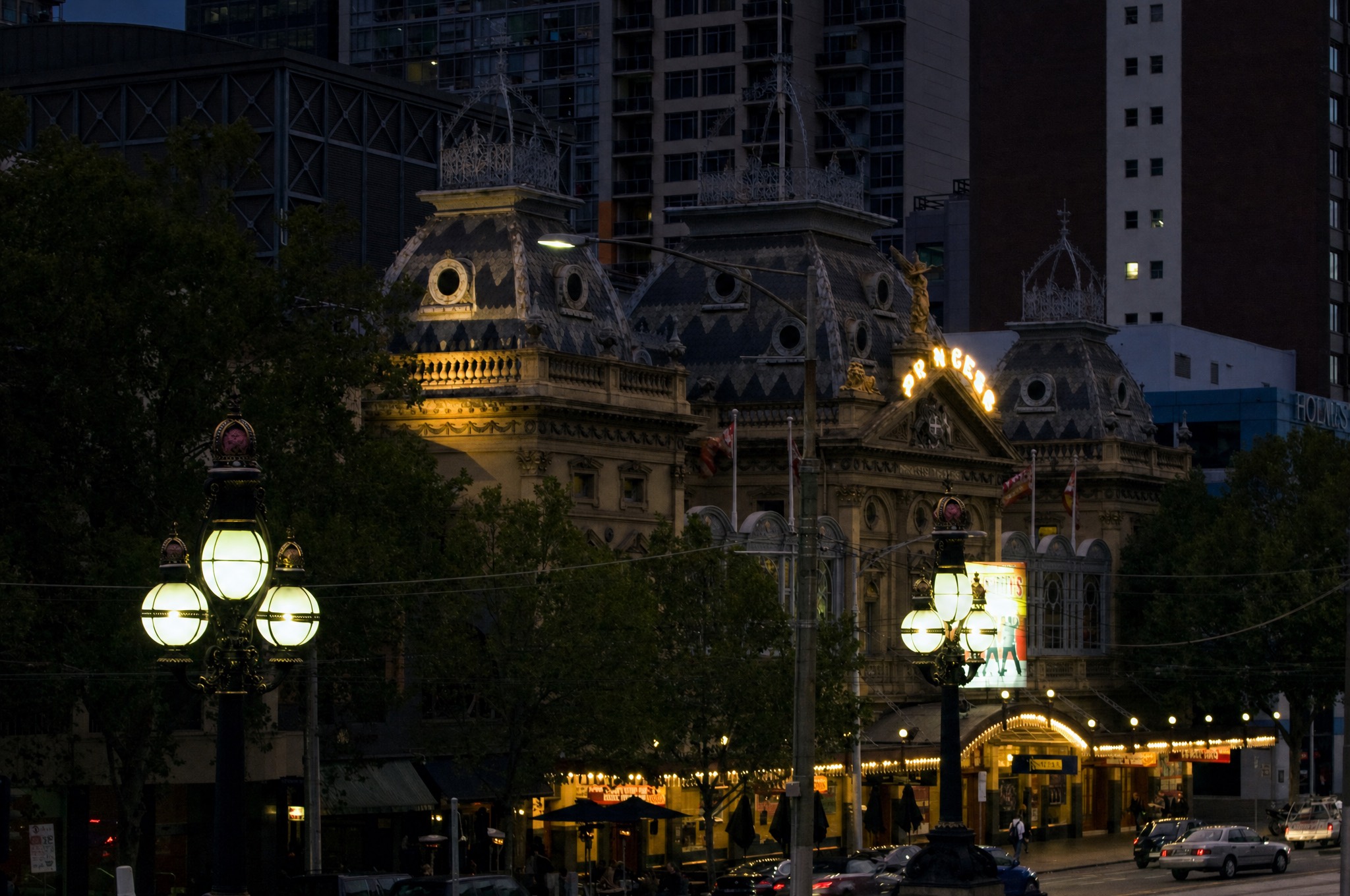
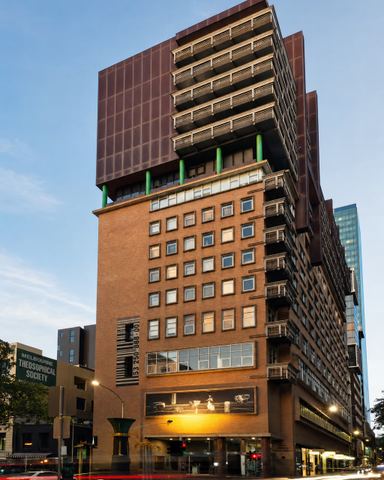
Melbourne's laneway bars began in one lane here, in 1994, when six architects fitted out a room in Meyers Place from what they could pull out of a skip. The theatres were long settled by then — the Princess on Spring Street since 1886, Her Majesty's and the Comedy facing each other across Exhibition — and Chinese Melbourne had been on Little Bourke since the mid-1850s. Victoria Hall (1887) and the Georges (1891) went up while the theatres were new, and people still live in them.
Dinner here arrived in three waves.
Nobody called Little Bourke Street 'Chinatown' until the 1970s, more than a century after Chinese immigrants first settled it. The Italians came after the war — Pellegrini's has been making espresso at 66 Bourke Street since 1954, with Florentino's a few doors along; both are named in the city's heritage assessment of Bourke Hill. The Greek end grew on the south side of Lonsdale in the same years. Three kitchens, none more than a few blocks from any front door here.
When the theatres let out.
The Comedy holds 1,008 and was the first theatre in the country built without a gallery; Her Majesty's faces it across Exhibition Street; the Forum, down on the Flinders Street corner, was the largest cinema in Australia at 3,371 seats. When the shows let out, the top of Bourke takes the crowd, and supper carries on in Crossley Street and Meyers Place. The rest of the audience waits for a ride home. Yours is a walk around the corner.
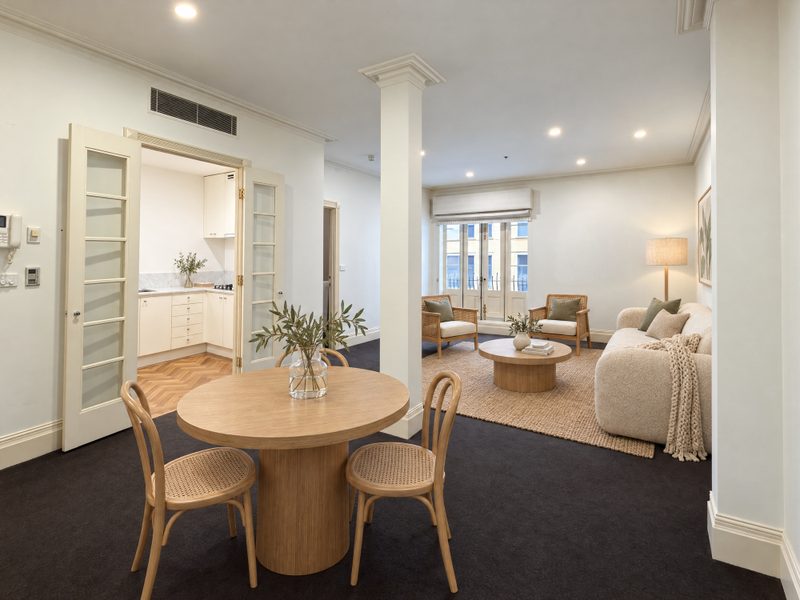
25/180 Little Collins Street
French doors to the lane at one end, a window into the atrium at the other
The Georges Apartments · 1891
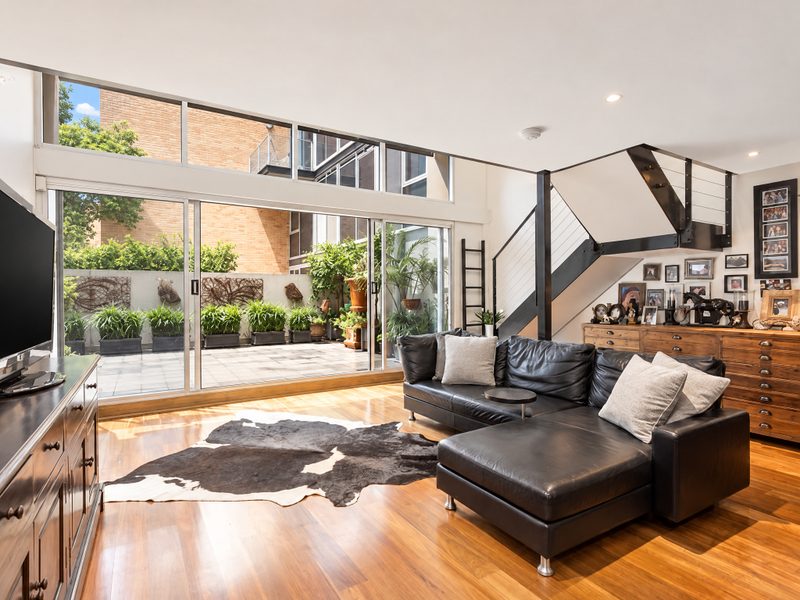
14/61 Mackenzie Street
An Exceptional Four-Bedroom CBD Residence with 5-Star Amenity
Indigo Loft Apartments · 1889
Midtown
Between Elizabeth and Swanston, the Library lawn down to Flinders Street.
11 buildings in the index · 2 for sale now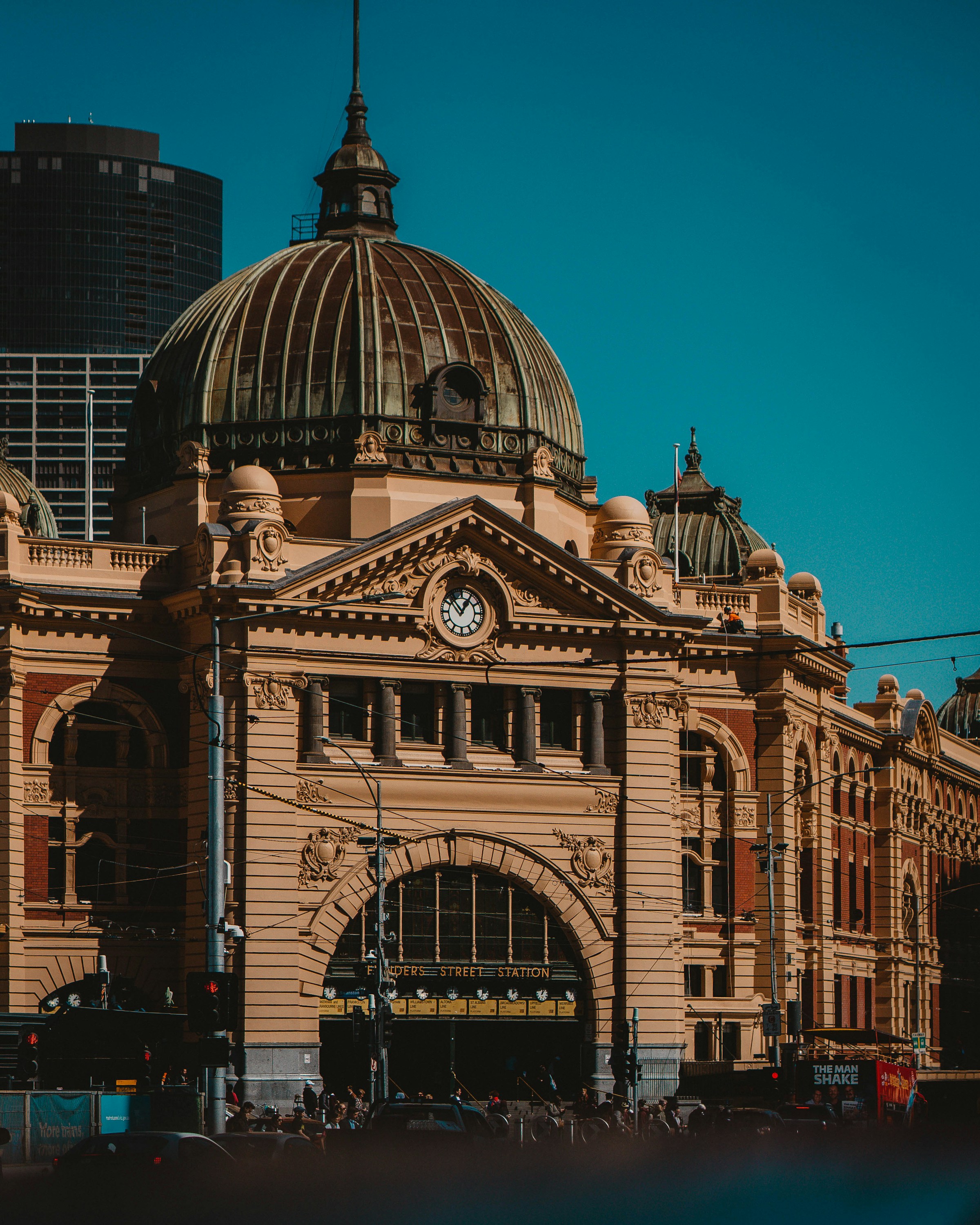
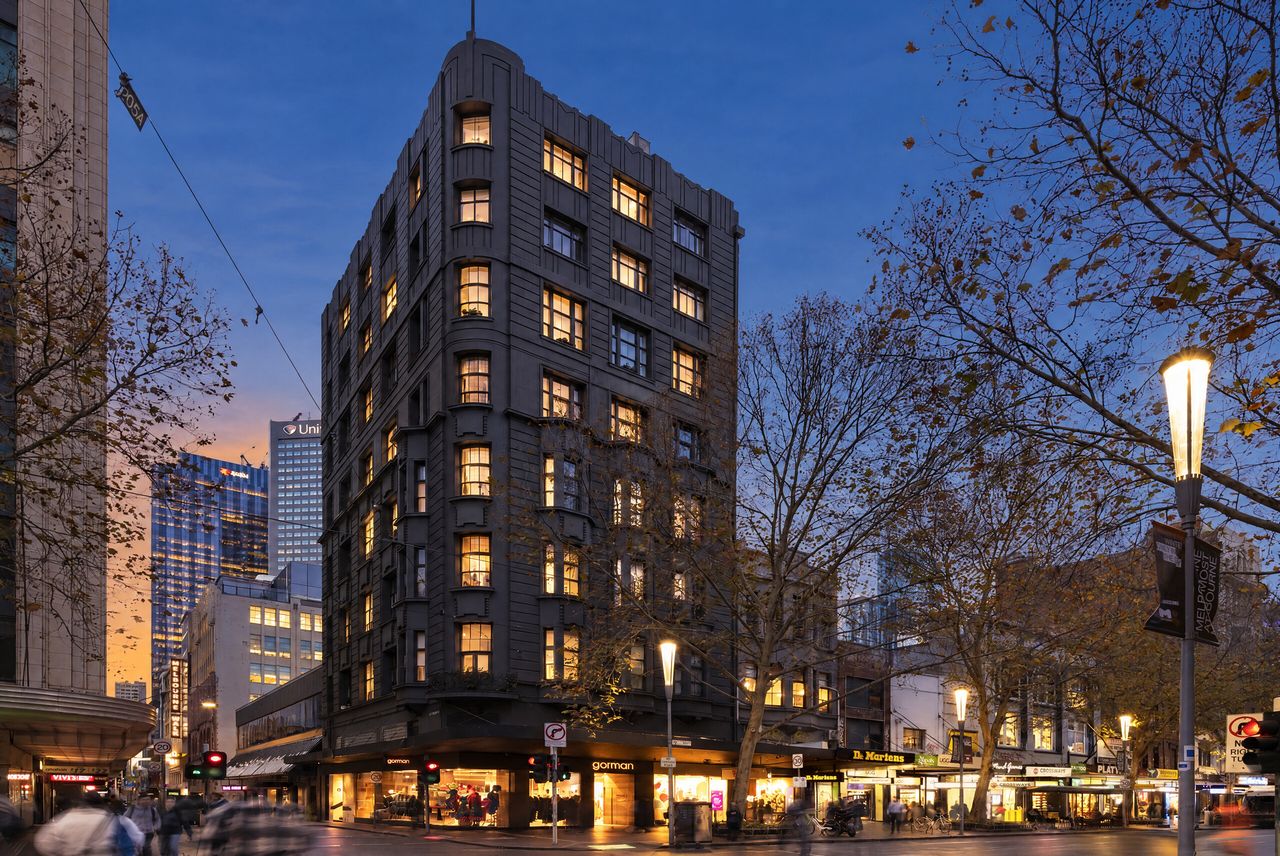
Melburnians once walked a fixed circuit through these blocks and called it doing the Block: Collins Street at Swanston, west to Elizabeth, north to Little Collins, and back. The route still works, and the covered streets that fed it are still open — the Royal Arcade from 1869, the Block Arcade from 1892, shortcuts before they were sights. The apartments are the floors above, one flight up from the middle of the city.
Everything is downstairs.
Bourke Street between Elizabeth and Swanston lost its through traffic in February 1978 and kept its trams. From the mall the Royal Arcade runs under glass to Little Collins, past Gog and Magog, the carved giants who have struck the hour on Gaunt's clock since 1892; a street south, the Block Arcade does the same over a mosaic floor that was the largest laid in Australia at the time. Neither is a detour. They are how you cross the block.
The architect kept his office upstairs.
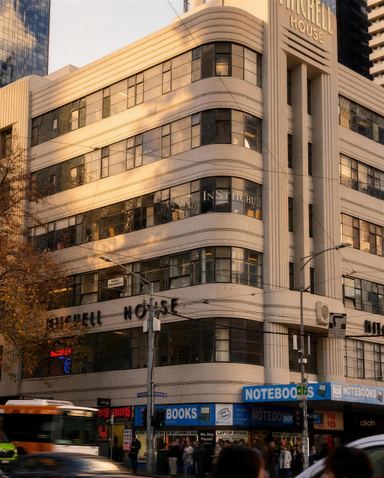
Harry Norris finished the Nicholas Building on the Swanston Street corner in 1926 and worked from a room inside it until 1955, above the last arcade in Melbourne to keep its vaulted leadlight ceiling, dome and fanlights. The blocks around it filled the same way — shops at street level, floors of offices and apartments above them: Manchester Unity on the Collins corner in 1932, the Majorca in 1929, Bible House (1898) and Manchester House (1912) toward Flinders Lane. Living here puts you one flight above the busiest footpaths in the city — over it all, not away from it.
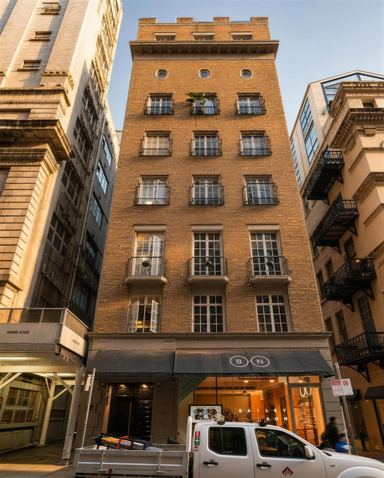
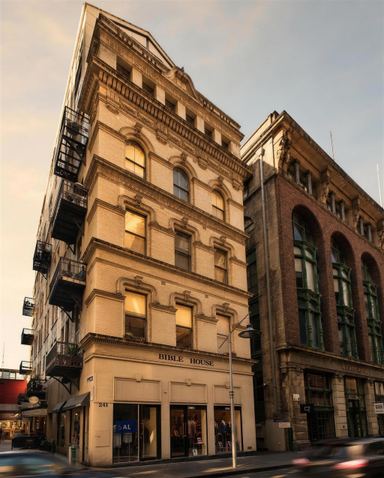
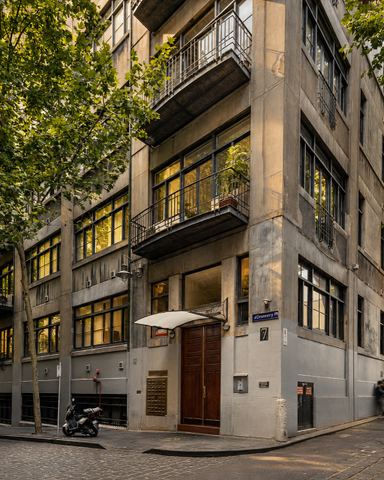
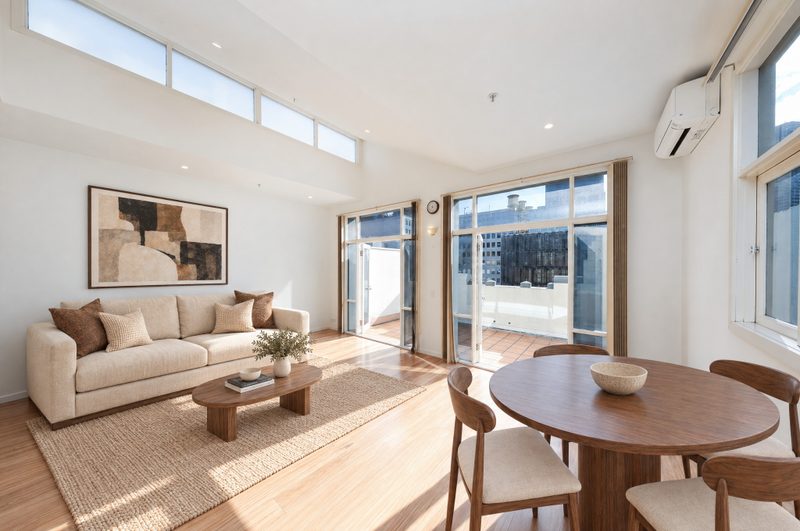
902/260 Little Collins Street
Penthouse Prestige Opposite Melbourne Town Hall
The Canns · 1920
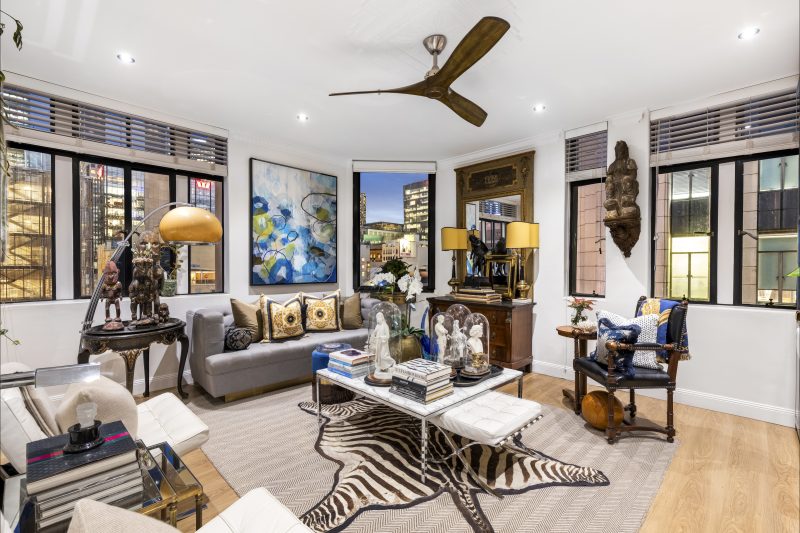
803/260 Little Collins Street
A Rare Corner Residence at Coveted Melbourne Address
The Canns · 1920
The Legal Precinct
William Street from the courts up to Flagstaff Gardens.
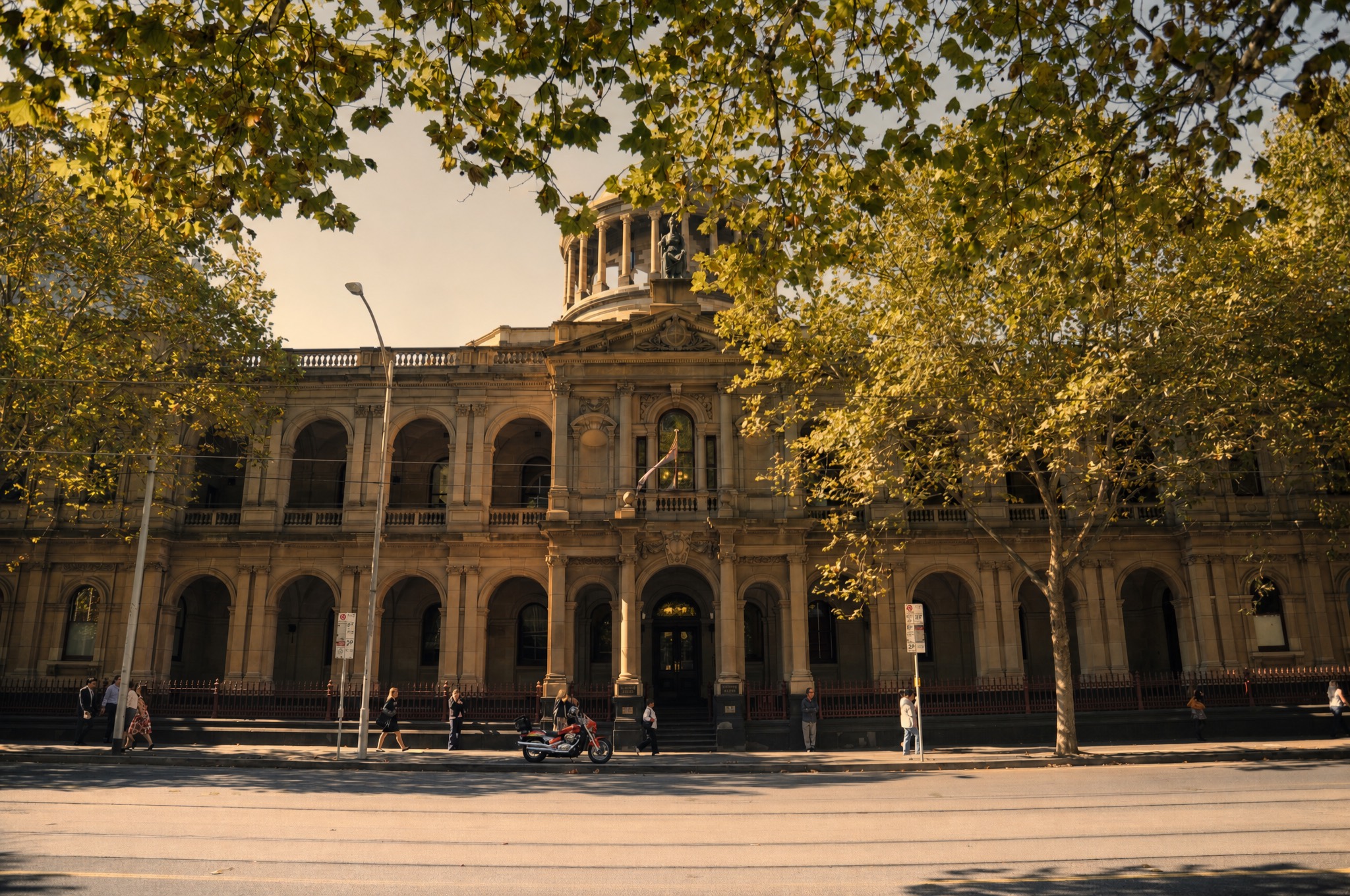
9 buildings in the index · 1 for sale nowFor thirty years, weekend trains ran straight past the station at the top of William Street. They stop there now, and the streets it serves are still the quietest in the grid: the Supreme, County and Magistrates' courts within a block of William and Lonsdale, the Victorian Bar's chambers across the road from them, and Melbourne's oldest park on the hill above.
The day belongs to the courts.
The Supreme, County and Magistrates' courts sit within a block of William and Lonsdale, and the Supreme has been at 210 William since its first sitting in February 1884 — a perfect square, eighty-five metres a side, and still the largest single-design court building in Australia. Across the road, Owen Dixon Chambers East was opened by Robert Menzies in October 1961, and the Bar's chambers company now houses more than 1,300 barristers. The day's hearing list goes up each morning. Anyone can sit at the back and watch.
The oldest park in the city.
Flagstaff Gardens has been public since 1862, which makes it Melbourne's oldest park, and it was the town's first colonial burial ground before that, in 1836. The flagstaff that gave it the name went up in 1840 to signal ships coming in to Williamstown, and it was from this hill, in 1850, that separation from New South Wales was announced by lighting a bonfire. Clement Hodgkinson laid it out in 1865 — elm avenues, Moreton Bay figs — and the bowls club, the netball courts and the barbecues came later. It is two blocks north of the Supreme Court.
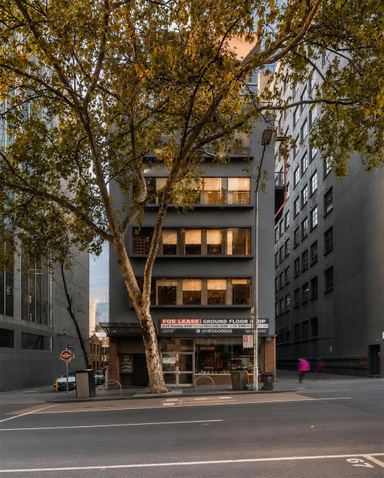
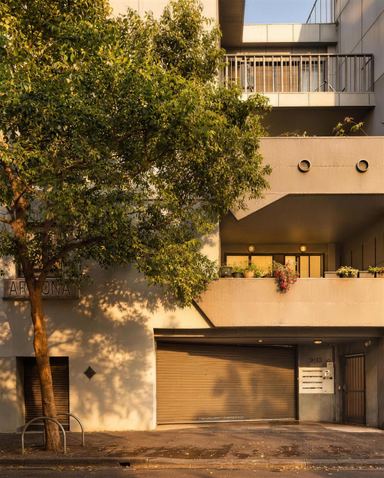
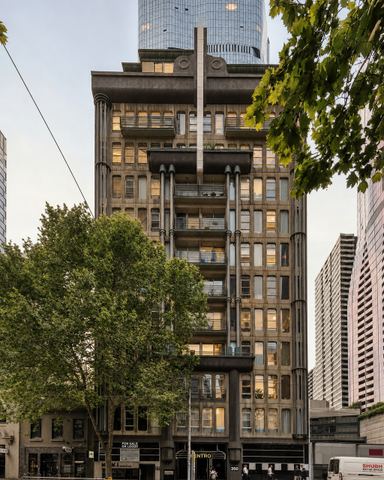
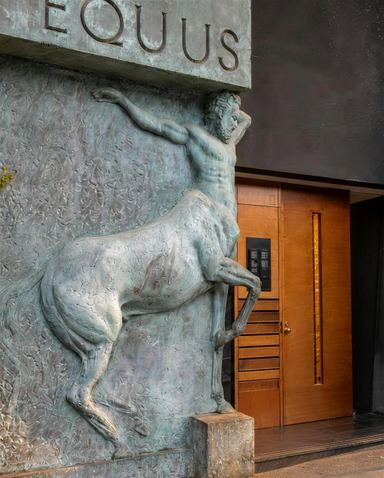
The West End
The grid's western blocks, from Queen Victoria Market down to the river.
9 buildings in the index · 2 for sale now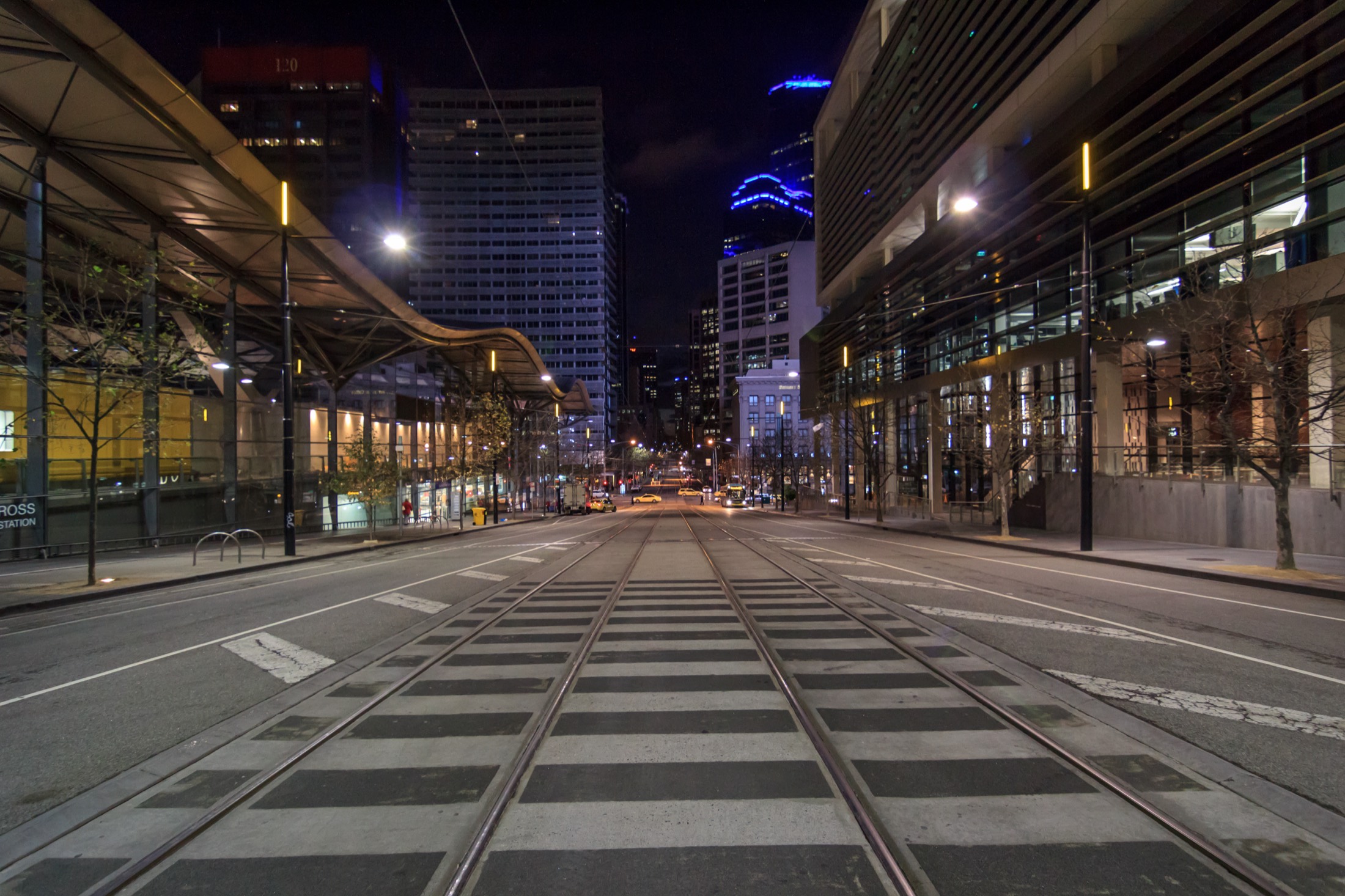
The Victorian Railways ran the state from a building at the bottom of Spencer Street that people now live in. Finished in 1893, given an extra floor in 1912 and another in 1921, emptied in the 1980s, it reopened in 1993 as Grand Central Apartments. That is the pattern at this end of the grid — from the market blocks down to the river, the plainest streets in the city have the biggest rooms behind them.
Built to hold wool.
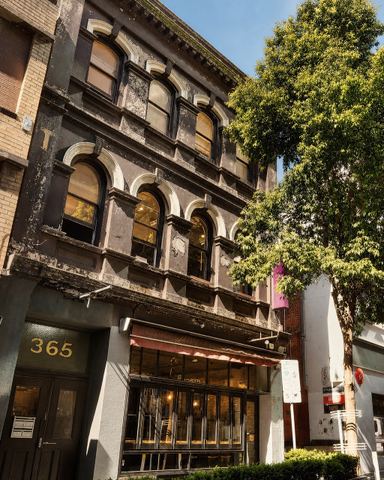
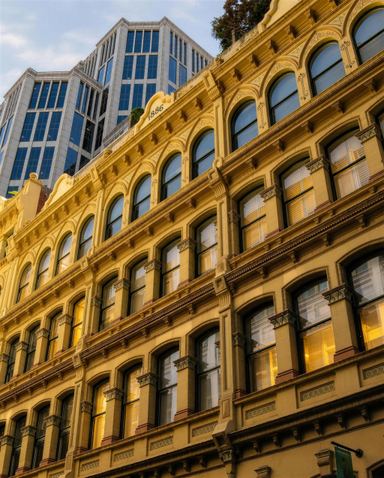
The boom of the late 1880s turned these blocks from small warehouses near the wharves into the mercantile centre of the city. William Pitt's Gothic fronts went up close together at the west end of Collins — the Olderfleet of 1889–90, the Rialto of 1891, the former Stock Exchange — with the Winfield alongside them opening in 1891 as the Wool Exchange. The Collins Street front was only the office: behind the Olderfleet, a warehouse ran the whole way back to Flinders Lane, down its own pitched delivery lane. Leicester House, a Flinders Lane warehouse of 1886, has been apartments since about 2000.
Five days a week, never a Monday.
Queen Victoria Market opened officially on 20 March 1878 and has traded across the same two city blocks ever since: Tuesday, Thursday, Friday, Saturday and Sunday, more than six hundred businesses. The oldest building on the site predates the market itself — the wholesale Meat Market of 1869. From any front door in these blocks the market is a walk, not a drive.
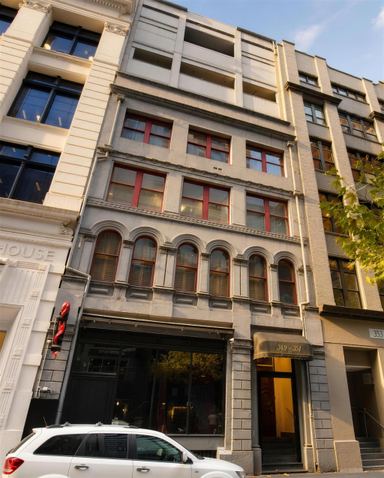
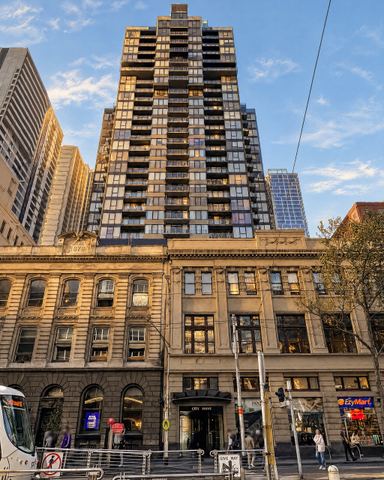
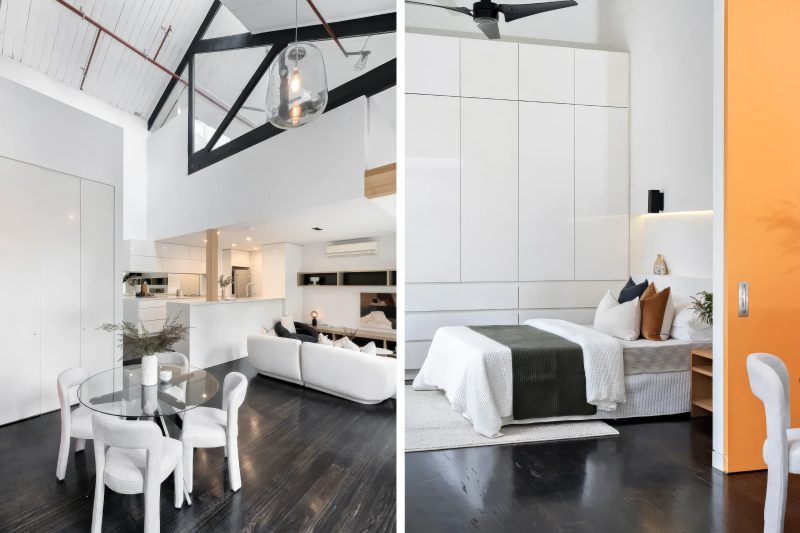
3012/668 Bourke Street
A Rare Warehouse Residence of Extraordinary Scale and Character
City Point
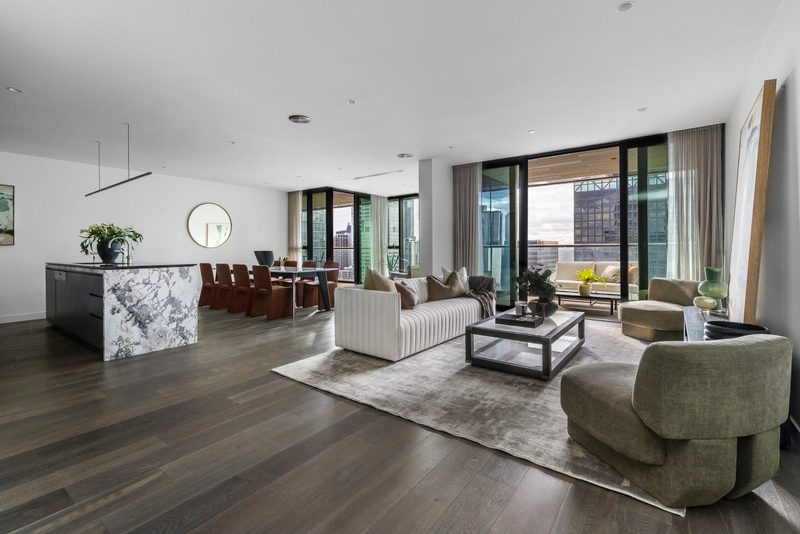
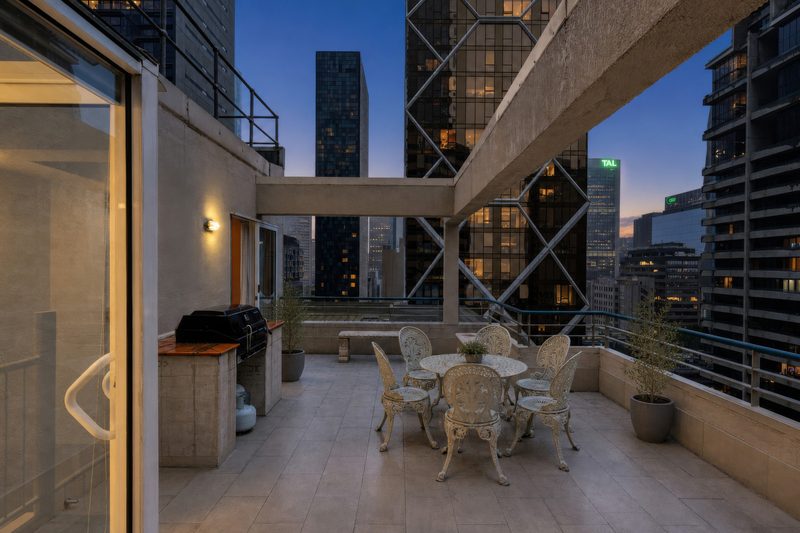
3803/439 Collins Street
Where Collins Arch Meets the Sky — A Sub-Penthouse of Rare Distinction
Collins Arch · 2020
Use arrow keys to pan and plus or minus to zoom. The list of precincts and buildings below opens the same guides and building pages.
Every building and listing on the platform sits somewhere in these five.