
Use arrow keys to pan and plus or minus to zoom. The list of precincts and buildings below opens the same guides and building pages.
The Theatre District
Bourke Street from Swanston up to Parliament House, theatres and Chinatown either side.
Melbourne's laneway bars began in one lane here, in 1994, when six architects fitted out a room in Meyers Place from what they could pull out of a skip. The theatres were long settled by then — the Princess on Spring Street since 1886, Her Majesty's and the Comedy facing each other across Exhibition — and Chinese Melbourne had been on Little Bourke since the mid-1850s. Victoria Hall (1887) and the Georges (1891) went up while the theatres were new, and people still live in them.
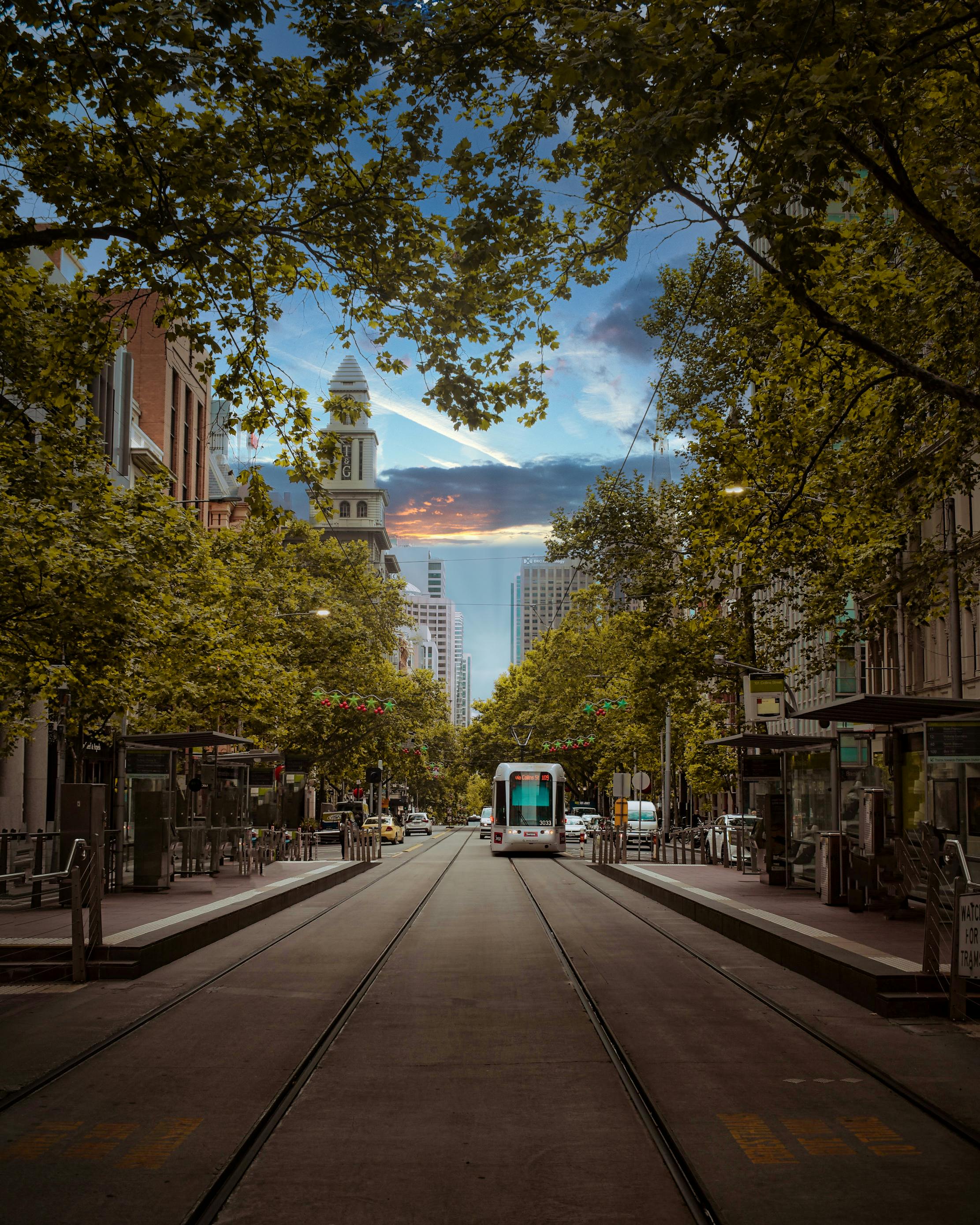
The east end at evening scale: the Princess Theatre (1886, William Pitt) on Spring Street, Her Majesty's (1886, Nahum Barnet) and the Comedy (1928) on Exhibition Street, with the Forum and the Athenaeum a short walk south. Pellegrini's has held 66 Bourke Street since 1954. The streets keep theatre hours.
- Comedy Theatre
- 1928; Hollinshed & Walkley, for J. C. Williamson Ltd. Seated 1,008 — the first in the country built without a gallery.
- VHR H2273
- The Princess's roof
- An eight-metre circular ceiling opening and two sliding roof sections, designed 1886 to vent the theatre's gas jets to the sky.
- VHR H0093 · SLV
- Little Bourke Street
- Chinese immigrants settled here from the mid-1850s; the area was not known as 'Chinatown' until the 1970s.
- City of Melbourne
- Meyers Place
- Melbourne's first laneway bar, opened 1994 by the six partners of Six Degrees Architects.
- ArchitectureAU
- Forum Theatre
- The former State Theatre; designed 1928 by John Eberson with Bohringer, Taylor & Johnson.
- VHR H0438
- Bourke Hill
- Assessed as an entertainment and leisure precinct of historic and social significance — the Princess, Pellegrini's, Florentino's.
- City of Melbourne
Buildings to start with.
- 01Bourke Hill ApartmentsLate Modernist1983
- 02Hero ApartmentsInterwar Functionalist1954
- 03QT Private ResidencesLate Modernist1978
- 04Shocko HouseEdwardian1920
- 05The Georges ApartmentsFrench Second Empire1891
- 06Bourke MewsItalian Renaissance Revival1892
- 071943
- 08Indigo Loft ApartmentsItalian Renaissance Revival1889
- 09Victoria HallItalian Renaissance1887
Dinner here arrived in three waves.
Nobody called Little Bourke Street 'Chinatown' until the 1970s, more than a century after Chinese immigrants first settled it. The Italians came after the war — Pellegrini's has been making espresso at 66 Bourke Street since 1954, with Florentino's a few doors along; both are named in the city's heritage assessment of Bourke Hill. The Greek end grew on the south side of Lonsdale in the same years. Three kitchens, none more than a few blocks from any front door here.
When the theatres let out.
The Comedy holds 1,008 and was the first theatre in the country built without a gallery; Her Majesty's faces it across Exhibition Street; the Forum, down on the Flinders Street corner, was the largest cinema in Australia at 3,371 seats. When the shows let out, the top of Bourke takes the crowd, and supper carries on in Crossley Street and Meyers Place. The rest of the audience waits for a ride home. Yours is a walk around the corner.
On the market in The Theatre District.
2 public listings currently filed to this precinct.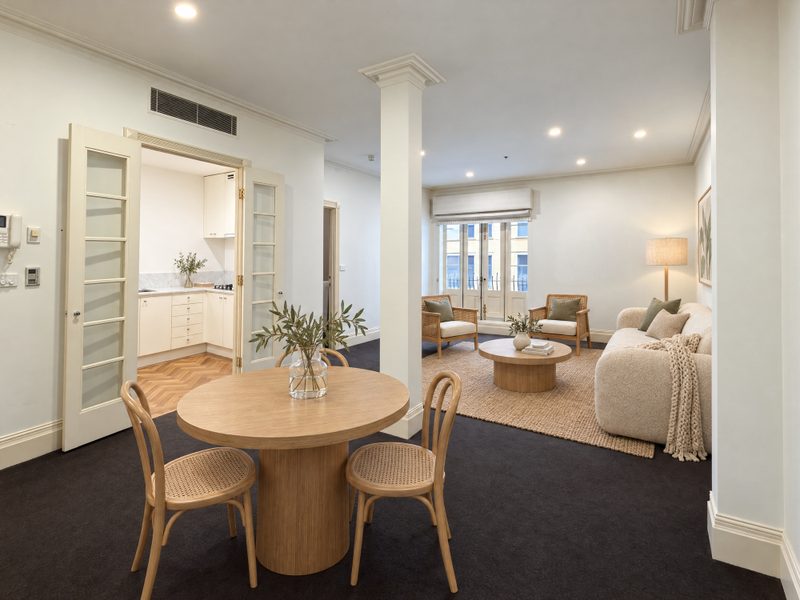
25/180 Little Collins Street
French doors to the lane at one end, a window into the atrium at the other
The Georges Apartments · 1891
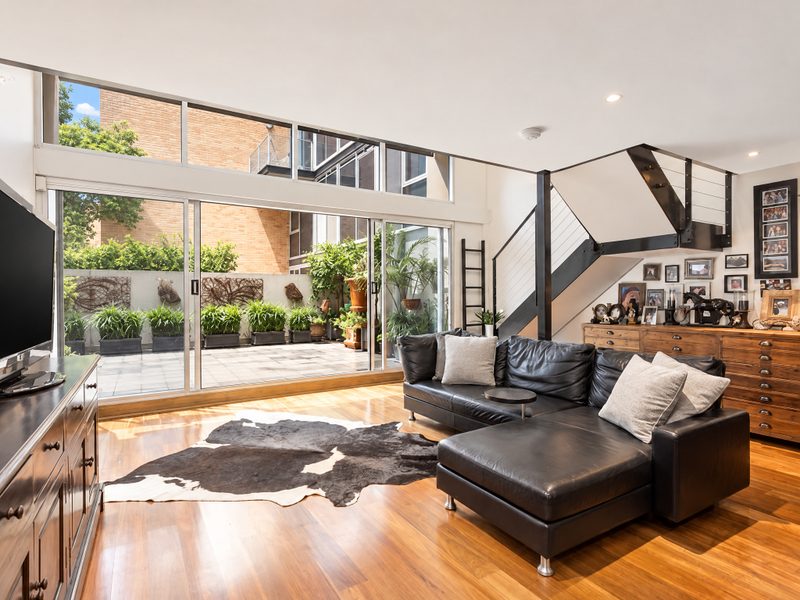
14/61 Mackenzie Street
An Exceptional Four-Bedroom CBD Residence with 5-Star Amenity
Indigo Loft Apartments · 1889
The Theatre District
From the Journal
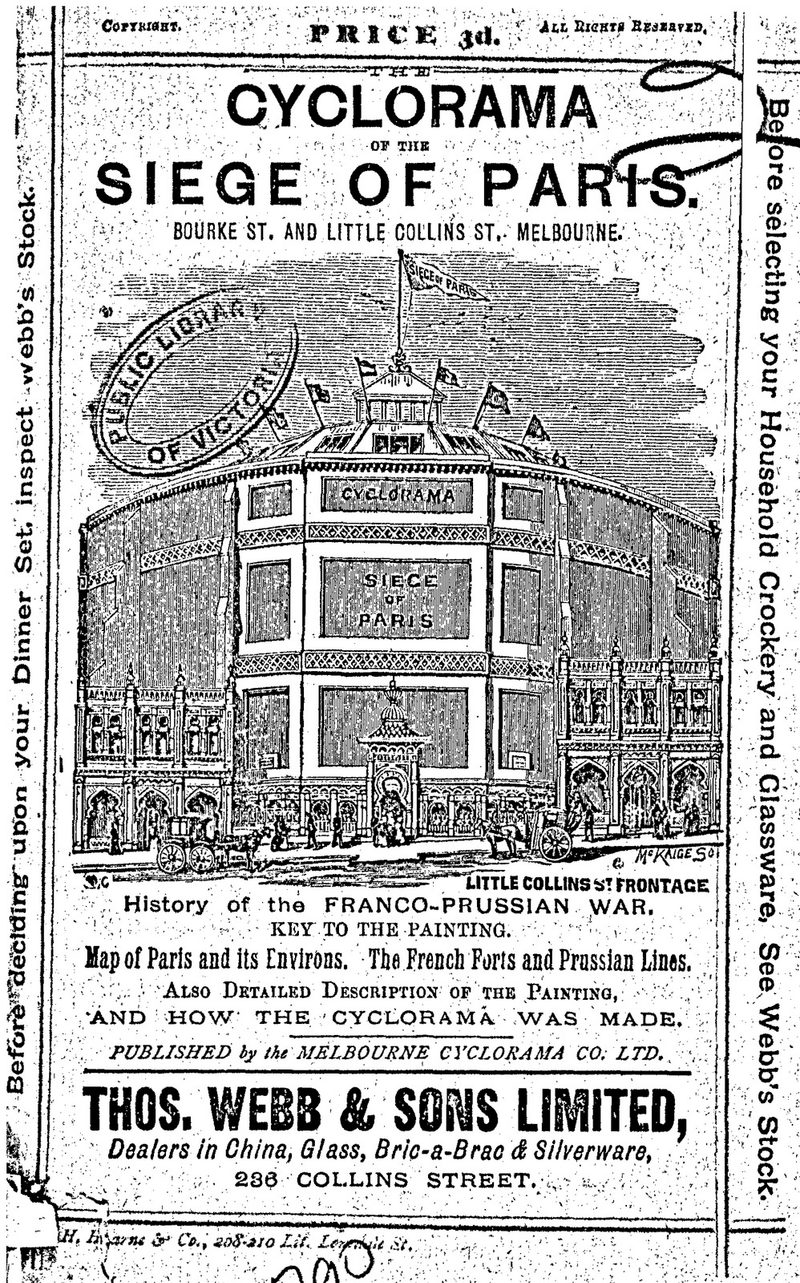
There was a 360-degree painting of Paris in here
In 1891 Melbourne paid to stand in the middle of a painting of Paris under siege, in a round hall behind Little Collins Street. Its curved walls are still under The Georges.
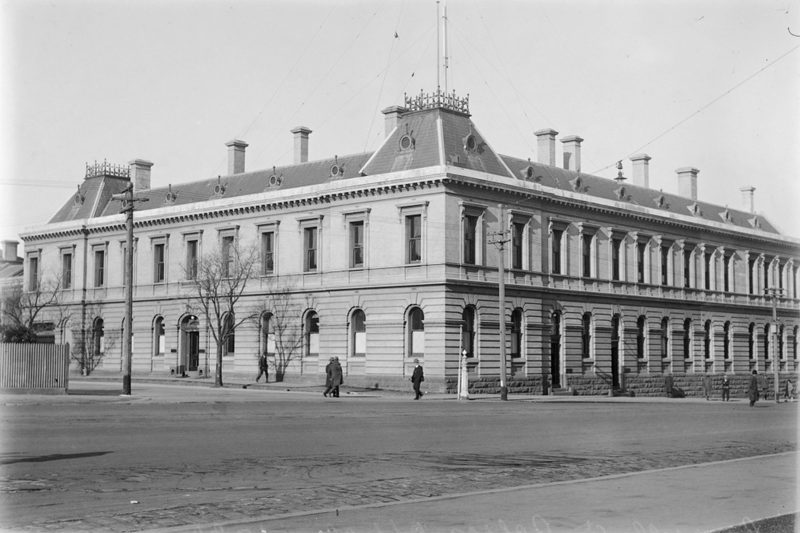
The war saved this police building
The 1889 police offices on the corner of Russell and Mackenzie Streets were due to be rebuilt to match a new headquarters. The war kept the plans from being finished, and the front still stands.