

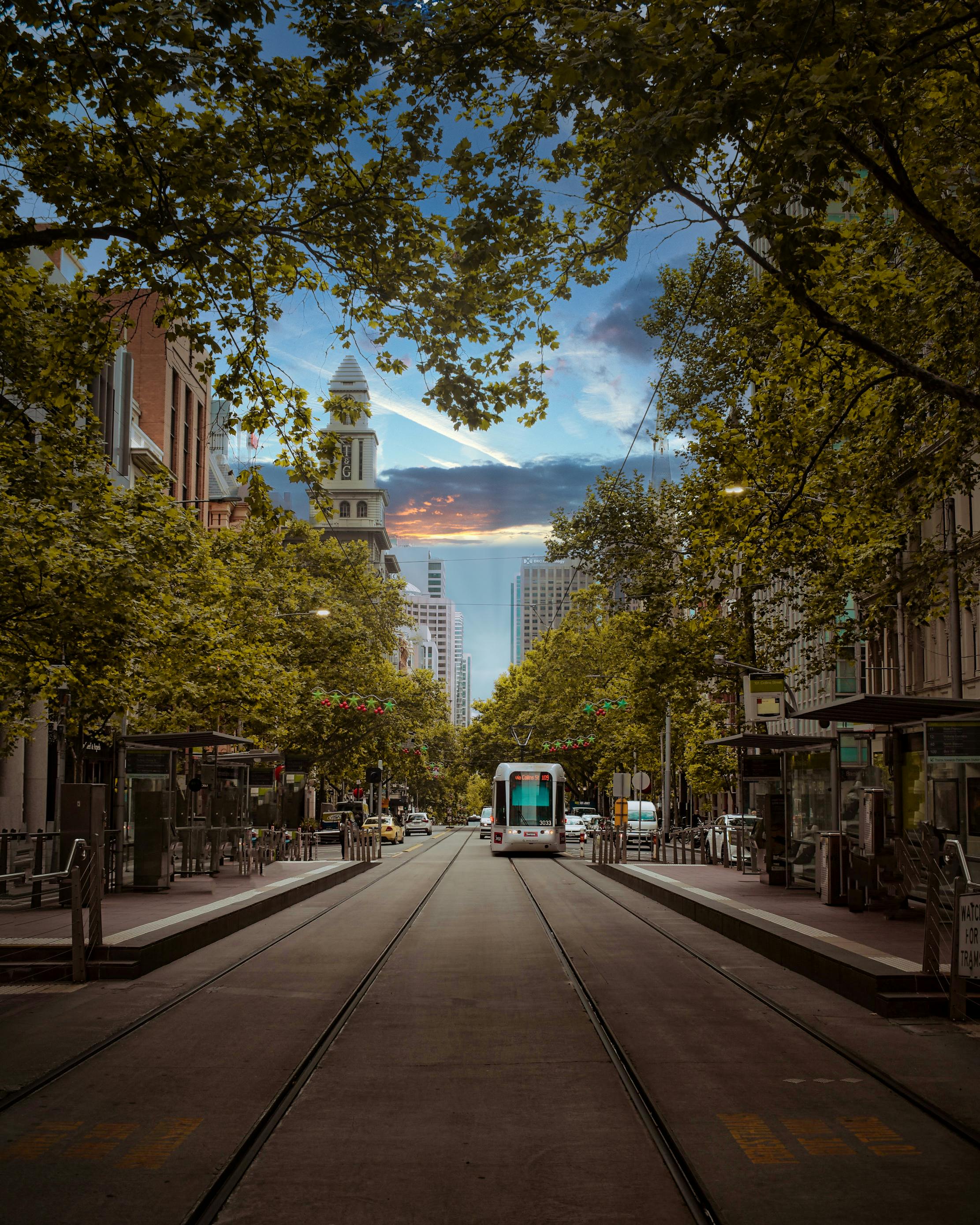
Use arrow keys to pan and plus or minus to zoom. The list of precincts and buildings below opens the same guides and building pages.
The West End
The grid's western blocks, from Queen Victoria Market down to the river.
The Victorian Railways ran the state from a building at the bottom of Spencer Street that people now live in. Finished in 1893, given an extra floor in 1912 and another in 1921, emptied in the 1980s, it reopened in 1993 as Grand Central Apartments. That is the pattern at this end of the grid — from the market blocks down to the river, the plainest streets in the city have the biggest rooms behind them.
West of King Street the grid turns to its working fabric — wool stores, goods sheds, and office warehouses, with the Olderfleet group (1889–90, William Pitt) holding western Collins Street. Queen Victoria Market has traded on the precinct's northern edge since 20 March 1878, and its 1869 Meat Market building is the oldest on the site. The best apartments here keep the original scale visible.
- Queen Victoria Market
- Officially opened 20 March 1878, markets having traded from the site before that date.
- Queen Victoria Market
- The market precinct
- The city's last surviving 19th-century market, an important hub of Melbourne social life since the late 1870s.
- City of Melbourne
- Olderfleet Buildings
- Built 1889–90 on Collins Street; William Pitt. The 1970s campaign to save it in part led to Victoria's heritage legislation.
- VHR H0037
- No. 2 Goods Shed
- Built 1889–90; 385 metres long, with twenty-six doors on the east side and twenty-eight on the west, each allocated to a particular destination.
- VHR H0933
- Grand Central
- Built 1893 as the Victorian Railways headquarters; vacated in the 1980s and reopened in 1993 as apartments.
- Heritage Victoria
- Winfield Building
- Constructed 1891 as the Wool Exchange; a focal point for the wool industry from the early 1890s.
- Heritage Victoria
- The market week
- Open five days — Tuesday, Thursday, Friday, Saturday and Sunday — across two city blocks and more than 600 small businesses.
- Queen Victoria Market
Buildings to start with.
- 01Leicester HouseVictorian Gothic1886
- 02349 Flinders LaneLocal Overlay
- 03City PointLocal Overlay
- 042020
- 05Collins HouseFederation1908
- 06Former Bank of AustralasiaRenaissance Revival1876
- 07Grand Central ApartmentsRenaissance Revival1893
- 082000
- 09Rocke TompsittRenaissance And Baroque1908
Built to hold wool.
The boom of the late 1880s turned these blocks from small warehouses near the wharves into the mercantile centre of the city. William Pitt's Gothic fronts went up close together at the west end of Collins — the Olderfleet of 1889–90, the Rialto of 1891, the former Stock Exchange — with the Winfield alongside them opening in 1891 as the Wool Exchange. The Collins Street front was only the office: behind the Olderfleet, a warehouse ran the whole way back to Flinders Lane, down its own pitched delivery lane. Leicester House, a Flinders Lane warehouse of 1886, has been apartments since about 2000.
Five days a week, never a Monday.
Queen Victoria Market opened officially on 20 March 1878 and has traded across the same two city blocks ever since: Tuesday, Thursday, Friday, Saturday and Sunday, more than six hundred businesses. The oldest building on the site predates the market itself — the wholesale Meat Market of 1869. From any front door in these blocks the market is a walk, not a drive.
On the market in The West End.
2 public listings currently filed to this precinct.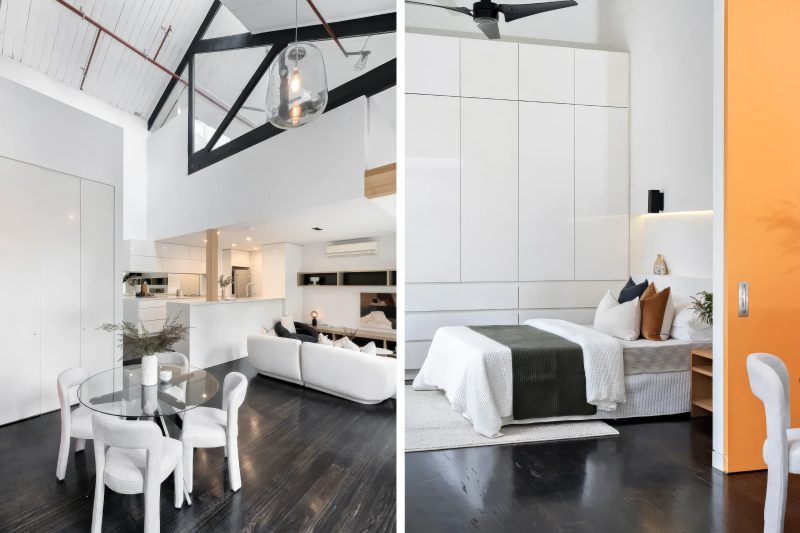
3012/668 Bourke Street
A Rare Warehouse Residence of Extraordinary Scale and Character
City Point
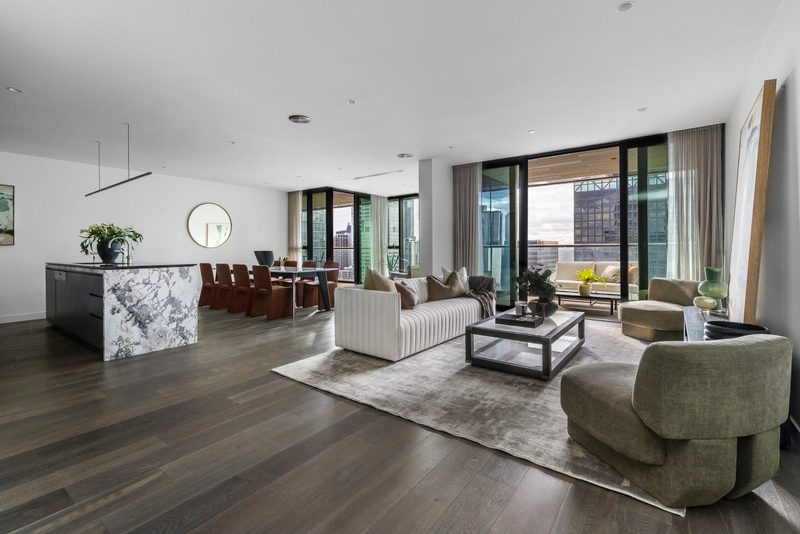
3803/439 Collins Street
Where Collins Arch Meets the Sky — A Sub-Penthouse of Rare Distinction
Collins Arch · 2020