
Use arrow keys to pan and plus or minus to zoom. The list of precincts and buildings below opens the same guides and building pages.
Midtown
Between Elizabeth and Swanston, the Library lawn down to Flinders Street.
Melburnians once walked a fixed circuit through these blocks and called it doing the Block: Collins Street at Swanston, west to Elizabeth, north to Little Collins, and back. The route still works, and the covered streets that fed it are still open — the Royal Arcade from 1869, the Block Arcade from 1892, shortcuts before they were sights. The apartments are the floors above, one flight up from the middle of the city.
The retail heart of the grid: the Royal Arcade (1869) and the Block Arcade (1892–93) set the arcade habit — 'doing the Block' was at its height in the 1880s boom — and the Manchester Unity Building (1932) holds the Swanston and Collins corner. The Flinders Lane garment quarter and the connecting laneways run through it; Flinders Street Station (completed 1910) closes the southern edge.
- Royal Arcade
- Erected 1869; Charles Webb, won in a design competition — one of about eighteen pre-1870 arcades surviving worldwide.
- VHR H0023
- Gog and Magog
- Mortimer Godfrey's carved automata have struck the hour on Gaunt's clock at the arcade's south end since 1892.
- VHR H0023
- Bourke Street Mall
- Closed to through traffic in February 1978; the mall opened officially in 1983, and the trams stayed.
- eMelbourne
- Nicholas Building
- 1926, Harry Norris — his own office inside until 1955; Cathedral Arcade below is Melbourne's last with its vaulted leadlight ceiling, dome and fanlights.
- National Trust B4079
- The Library dome
- 114 feet across and 114 feet high; the largest ribbed concrete dome in the world at its 1911 completion.
- State Library Victoria
- Block Arcade
- Collins Street section completed 1892, Elizabeth Street 1893; David C. Askew of Twentyman & Askew.
- VHR H0032
- 'Doing the Block'
- The promenade between the plush stores reached its height in the boom years of the 1880s and 1890s.
- City of Melbourne
Buildings to start with.
- 01Ashdowne HouseNeo Georgian1940
- 02Bible HouseFree Classical1898
- 03Dover's BuildingState Listed1910
- 04Flinders HouseItalianate1870
- 05Majorca BuildingSpanish Colonial Revival1929
- 06Manchester HouseLocal Overlay1912
- 07Manchester Unity BuildingNeo Gothic1932
- 08Currie and Richards WarehouseRenaissance Revival
- 091884
- 10Mutual BuildingVictorian1891
- 11The CannsNeo Baroque1920
Everything is downstairs.
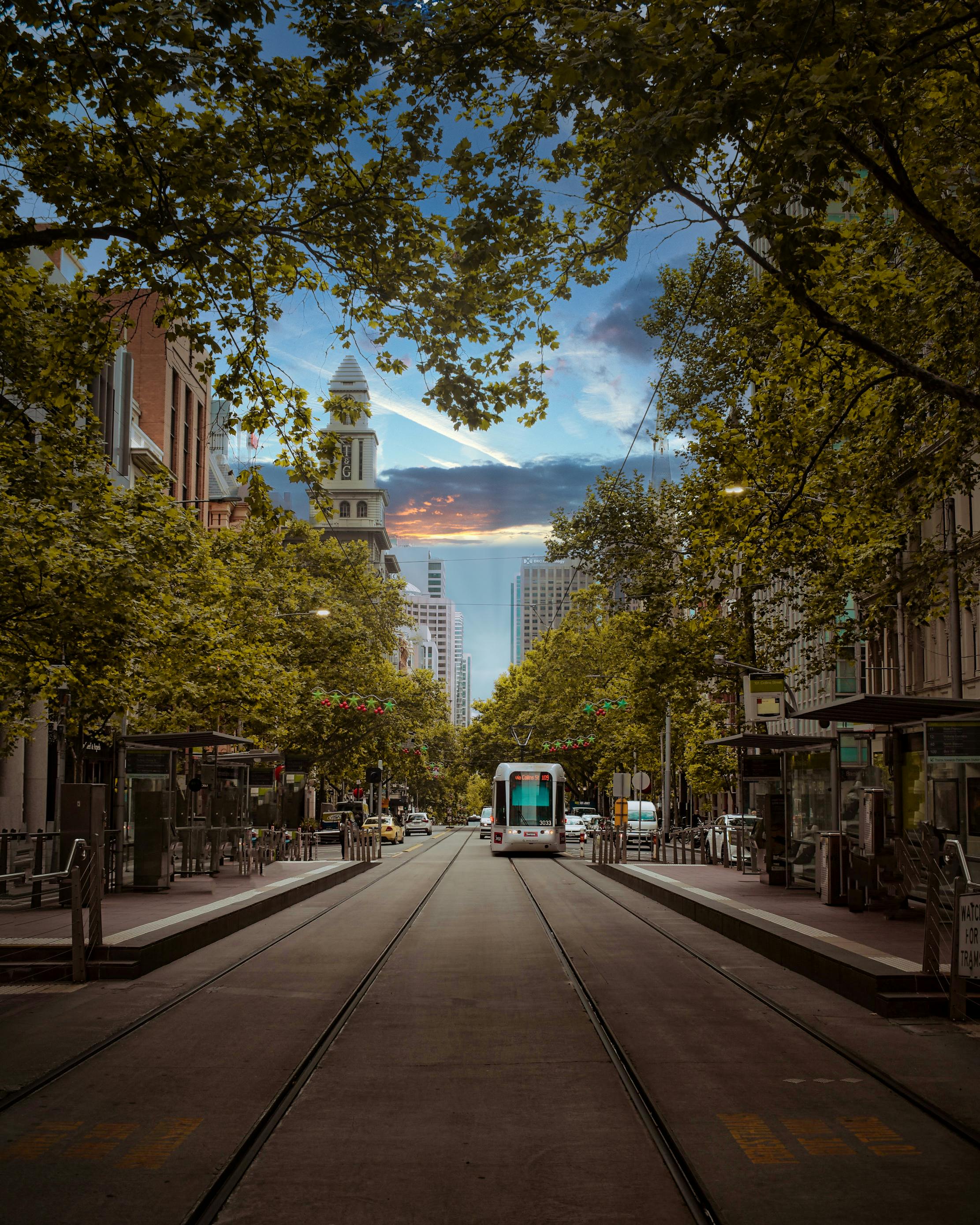
Bourke Street between Elizabeth and Swanston lost its through traffic in February 1978 and kept its trams. From the mall the Royal Arcade runs under glass to Little Collins, past Gog and Magog, the carved giants who have struck the hour on Gaunt's clock since 1892; a street south, the Block Arcade does the same over a mosaic floor that was the largest laid in Australia at the time. Neither is a detour. They are how you cross the block.
The architect kept his office upstairs.
Harry Norris finished the Nicholas Building on the Swanston Street corner in 1926 and worked from a room inside it until 1955, above the last arcade in Melbourne to keep its vaulted leadlight ceiling, dome and fanlights. The blocks around it filled the same way — shops at street level, floors of offices and apartments above them: Manchester Unity on the Collins corner in 1932, the Majorca in 1929, Bible House (1898) and Manchester House (1912) toward Flinders Lane. Living here puts you one flight above the busiest footpaths in the city — over it all, not away from it.
On the market in Midtown.
2 public listings currently filed to this precinct.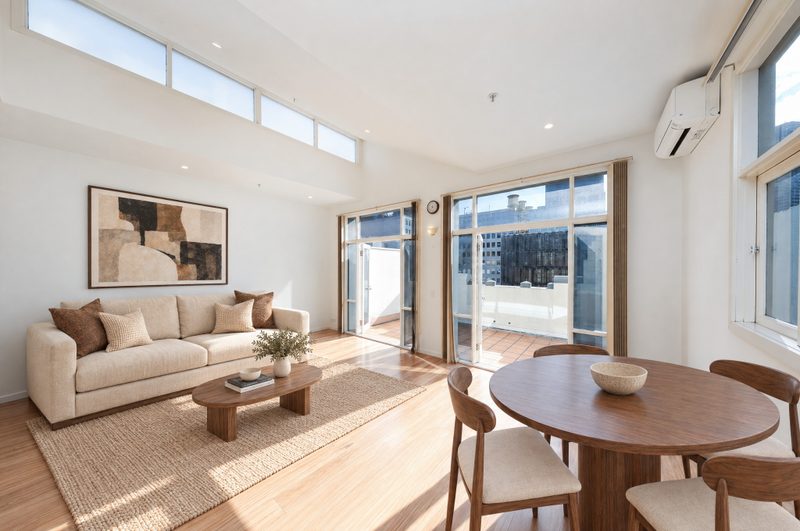
902/260 Little Collins Street
Penthouse Prestige Opposite Melbourne Town Hall
The Canns · 1920
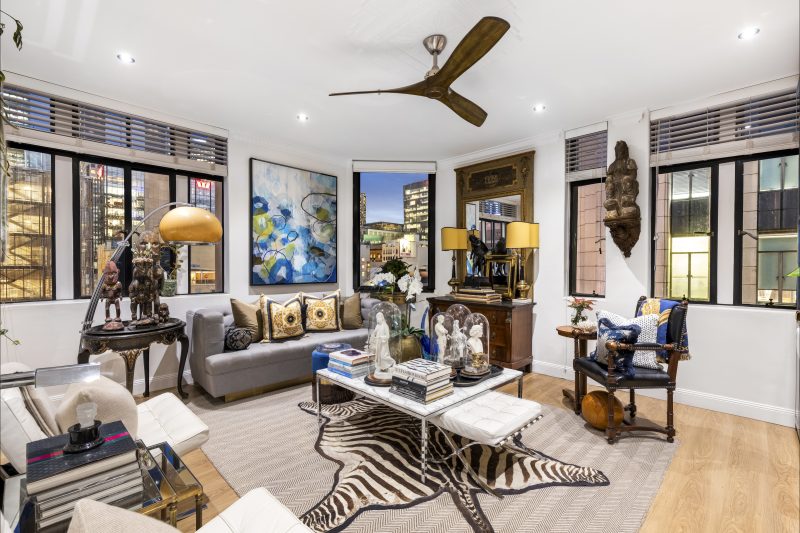
803/260 Little Collins Street
A Rare Corner Residence at Coveted Melbourne Address
The Canns · 1920
Midtown
From the Journal
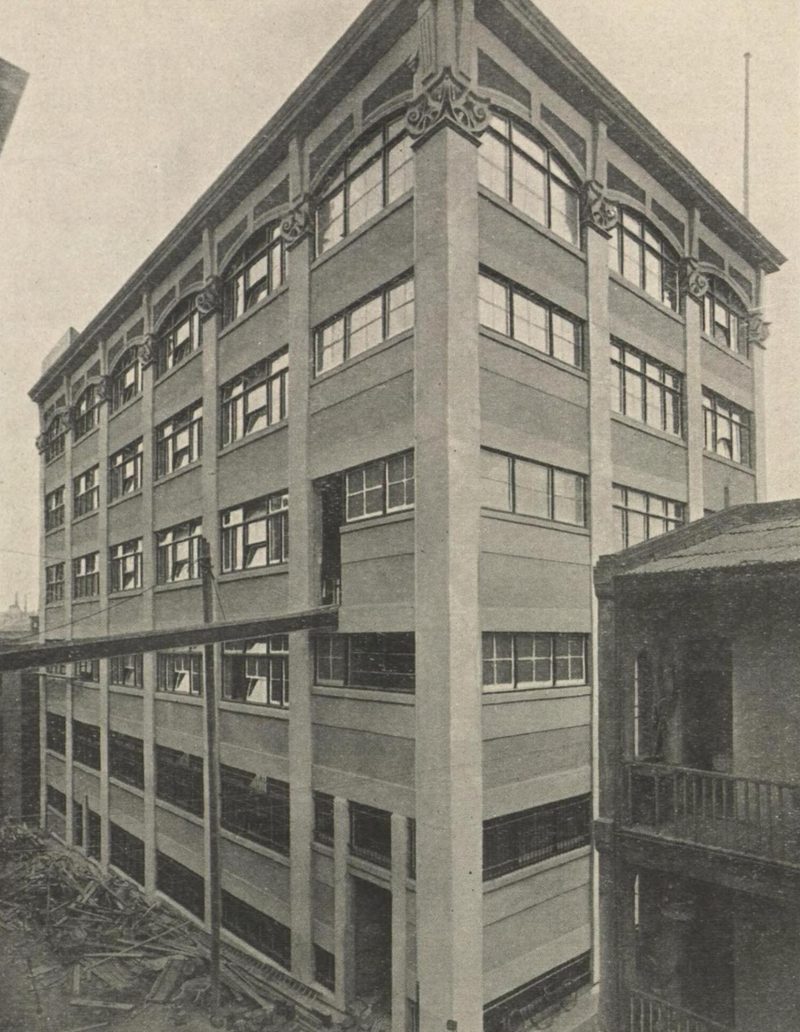
A cigarette factory, with a skating rink on the roof
Dover’s Building was built in 1910 as a cigarette factory for 900 cigarette makers. The staff had a skating rink on the roof.
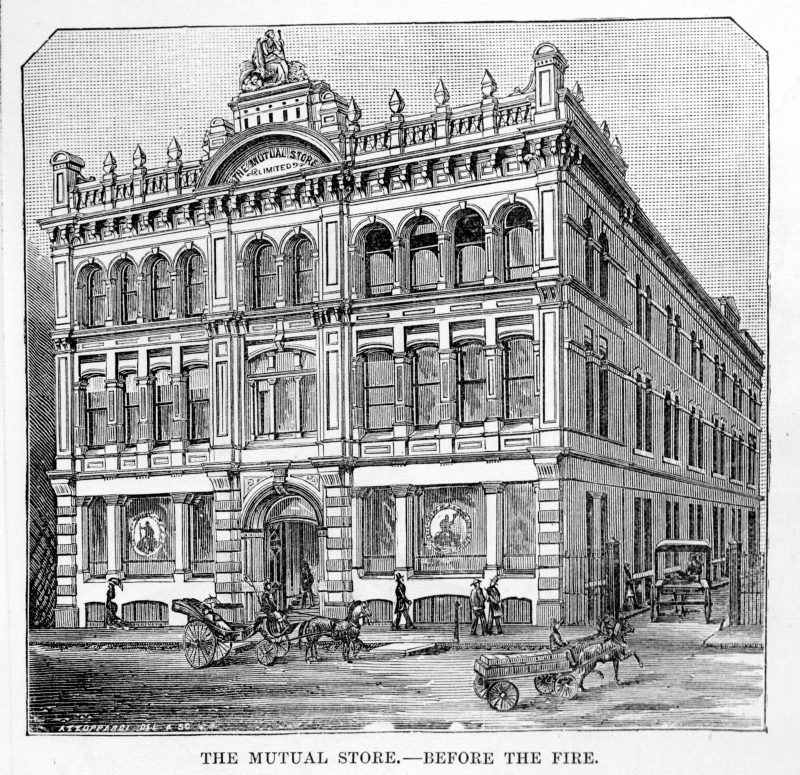
It burned down on New Year’s Day. By noon the next day it had taken 200 orders.
The Mutual Store opposite Flinders Street Station burned out on New Year’s Day 1891 and was trading again the next morning. It was rebuilt to survive the next fire, and in 1897 it did.